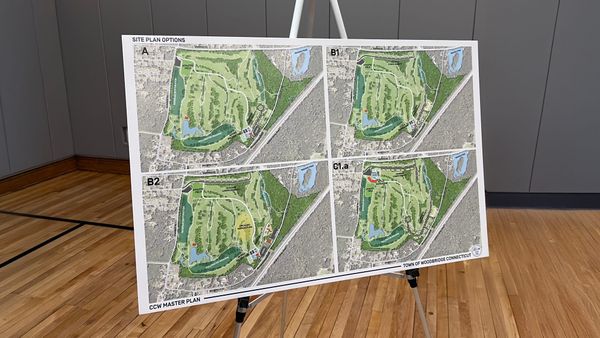
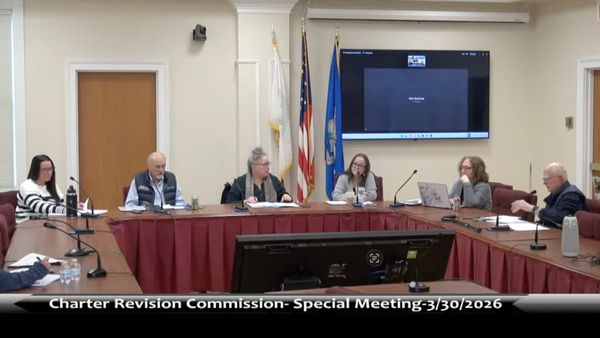
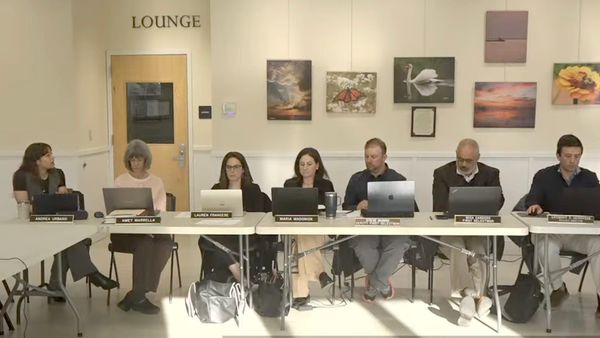
Watching the work of government
A 50-year-old news clipping from Woodbridge reveals a time before FOI

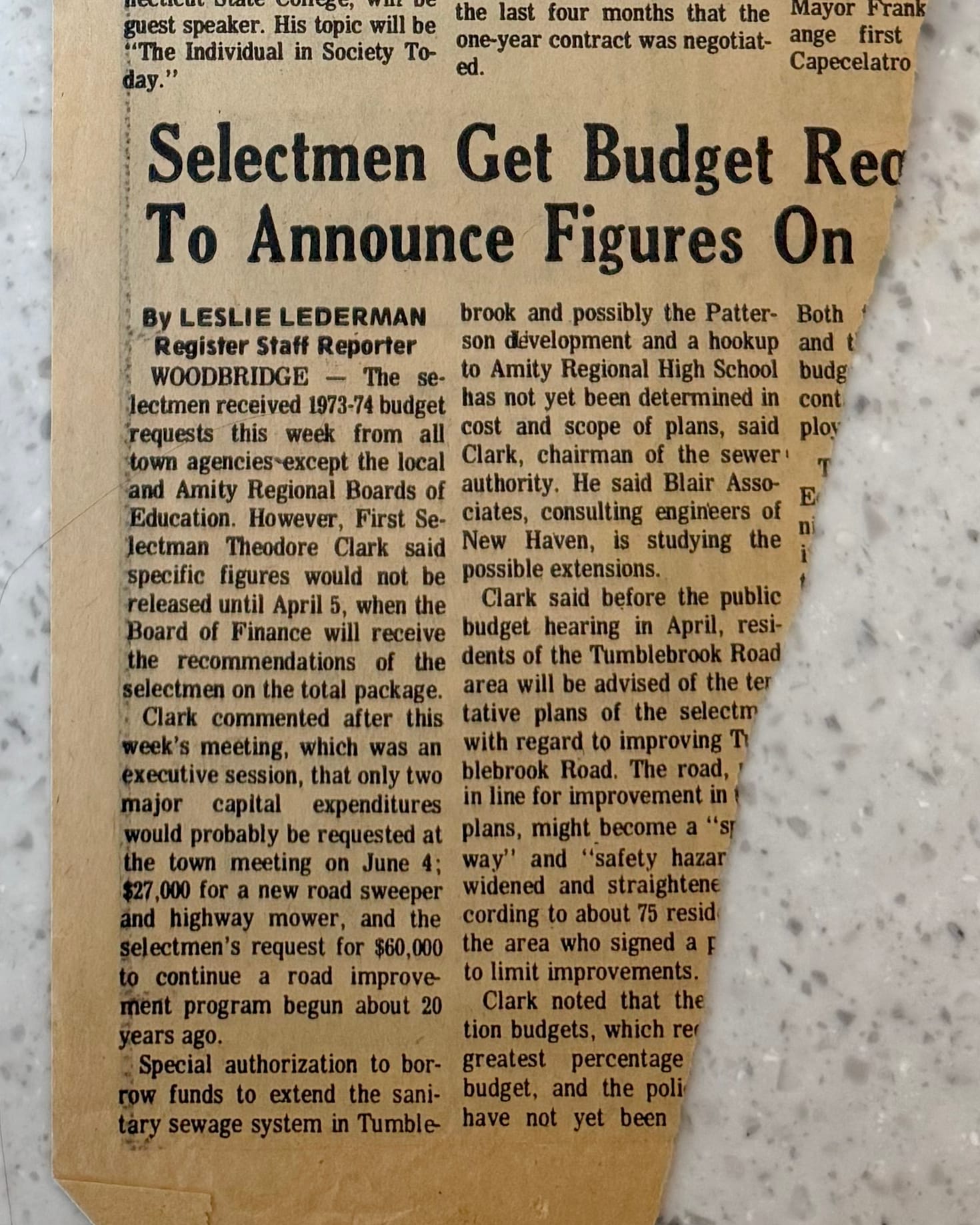
While sorting through papers that belonged to my father, I came across a fragment of a newspaper clipping from early 1973. At the bottom of the page there was an article about Woodbridge and the annual budget process.
One line stopped me cold.
The article noted that the Board of Selectmen had met in executive session to discuss the town budget.
Executive session? For the budget?
Today, that would be unthinkable. Budgets are debated in public. Documents are posted. Meetings are live-streamed. Executive session is tightly limited to specific purposes defined by law.
But in the early 1970s, things were different.
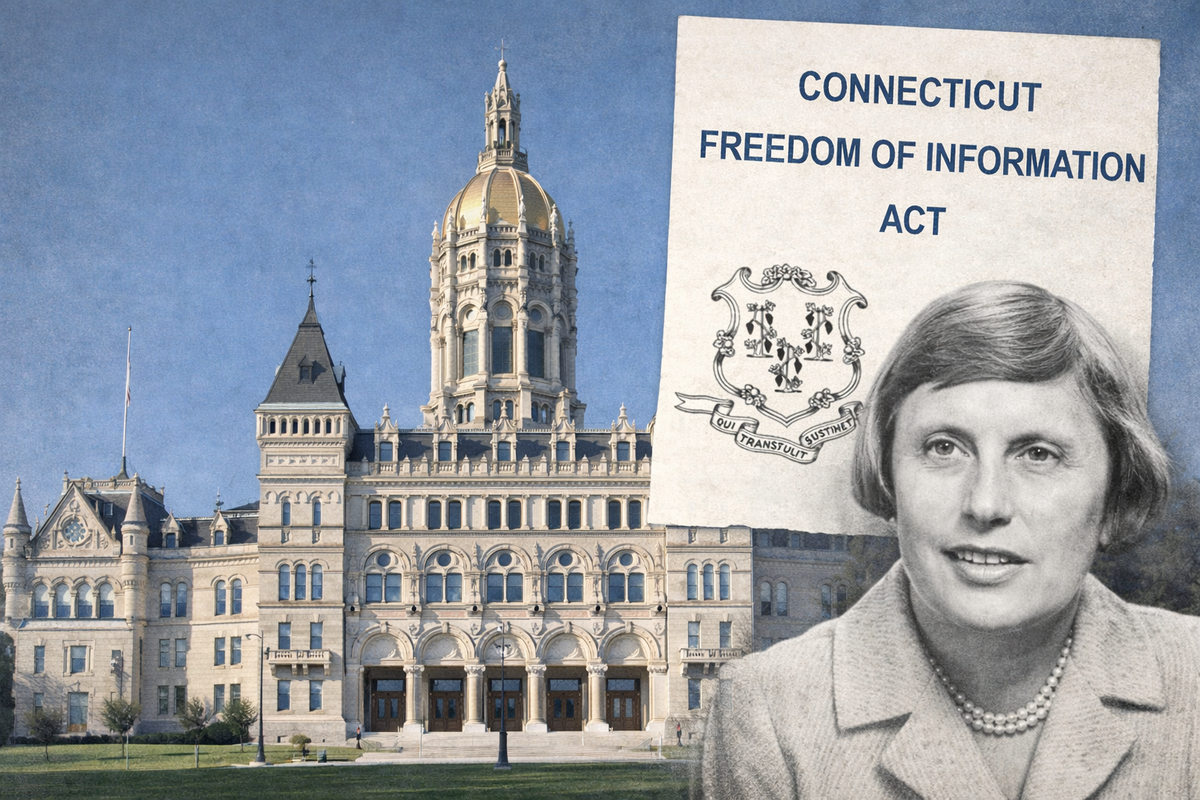
This was before the resignation of President Richard Nixon. Before Watergate fully reshaped public expectations about government secrecy and accountability. And — crucially for Connecticut — before the adoption of our state’s Freedom of Information Act under the leadership of Governor Ella T. Grasso in 1975. She took office as the nation’s first woman elected governor in her own right amid the national reform movement that followed Nixon’s resignation in 1974.
The news clipping functions as a time capsule to remind us that transparency did not expand by accident. It expanded because trust broke — and citizens and their elected representatives demanded clearer rules about how government operates.
What Freedom of Information actually means
When we talk about FOI, it can sound procedural or technical. But it rests on something far more fundamental. The First Amendment protects freedom of speech and of the press. Over time, courts and legislatures have recognized that those protections carry with them the public’s right to observe government proceedings.
Democracy requires an informed electorate — and that, in turn, relies upon the public’s ability to observe its government in real time — to see documents, to attend meetings, to understand deliberations before decisions are final.
In the lead-up to Election Day, candidates for public office campaign for the votes of those they would represent. We hear a lot about their hopes and aspirations, and the direction they would like to lead us. This of course is an important aspect of democracy — the people choose their leaders.
But the day-to-day business of democracy does not run only during election season. It also runs in the months in between — when budgets are drafted, contracts negotiated, appointments made, zoning regulations revised, and long-term plans quietly shaped.
And here is the simple question at the heart of it: How can citizens comment meaningfully on what they cannot see?
An agenda alone does not always provide full context. A meeting is not truly public if the public lacks context. A vote is strongest when discussion has taken place openly.
Freedom of Information laws create the structure. But culture — and participation — give that structure life.
The role of public comment
Public comment is sometimes misunderstood. It is not meant to be adversarial. It is not a performance. It is not a nuisance. It is participation.
When citizens show up — in person or with correspondence — and speak about an issue before a vote is taken, they are exercising both the spirit of FOI and the protections of the First Amendment.
Government is strongest when it expects to be observed. And it improves further when it expects to be engaged. But engagement requires preparation. And preparation requires access — to agendas, to backup materials, to the reasoning behind proposals.
Transparency is not simply about posting a notice — it is about access. It is about enabling understanding.
The role of the press
Campaign season generates attention. Yard signs appear. Mailers arrive. Arguments sharpen — especially on social media and with text messaging, where not all voters see all messages.
But when our elected representatives get down to the work of governance, that’s when the rubber meets the road. In Woodbridge, important votes come up at monthly meetings throughout the year — most notably as the town budget takes shape. Decisions about staffing, capital improvements, land use, and long-term planning are all wrapped into the budget-setting process as funding decisions are made.
So if voters engage only when campaigns are underway, they are responding to narratives. But if they stay engaged throughout the two years between town elections, they will be prepared to respond to a broader understanding of our town and its needs.
The role of a free press — including a small, hyper-local publication like the Woodbridge Town Chronicle — is to help people see what is happening while it is happening. To provide continuity between meetings. To document the reasoning. To preserve the record.
That old clipping survived in a drawer full of papers for more than fifty years. It is a reminder of a time before FOI laws gave the public greater access to what government was doing in its name. Today, we have stronger laws. The question is whether we will use them.
From 1973 to now
In 1973 when this news account was published, Woodbridge could discuss its budget behind closed doors and no one would have found it unusual. Today, that would raise immediate legal and public questions.
The distance between those two realities was built by law — and by public insistence. Freedom of Information gives us the right to see. The First Amendment gives us the right to speak. Neither guarantees that we will.
Transparency is not automatic. It is a habit. It is a culture. It is a choice.
Looking ahead
Later this month, on February 26 at 6:30 pm at the Woodbridge Center Cafe, a special information session will be held for board and commission members on Freedom of Information requirements, Robert’s Rules of Order, meeting procedures, and the responsibilities of public service — what it means to conduct the people’s business in the open.
Training like this matters. It reinforces not only compliance, but best practices and the broader culture of governance. It reminds those who serve — many of whom volunteer significant time in service to the community — that they are stewards of public trust.
If you are a resident who cares about how decisions are made in Woodbridge, consider tuning in, reviewing the materials, asking questions, or attending a meeting in the weeks ahead.
Because the strength of open government depends not only on law — but on us.