TPZ approves 804 Fountain Street proposal after divided deliberations on December 18
Commissioners weigh staff guidance, zoning standards, and limits on discretion as a 4–2 vote approves special exceptions
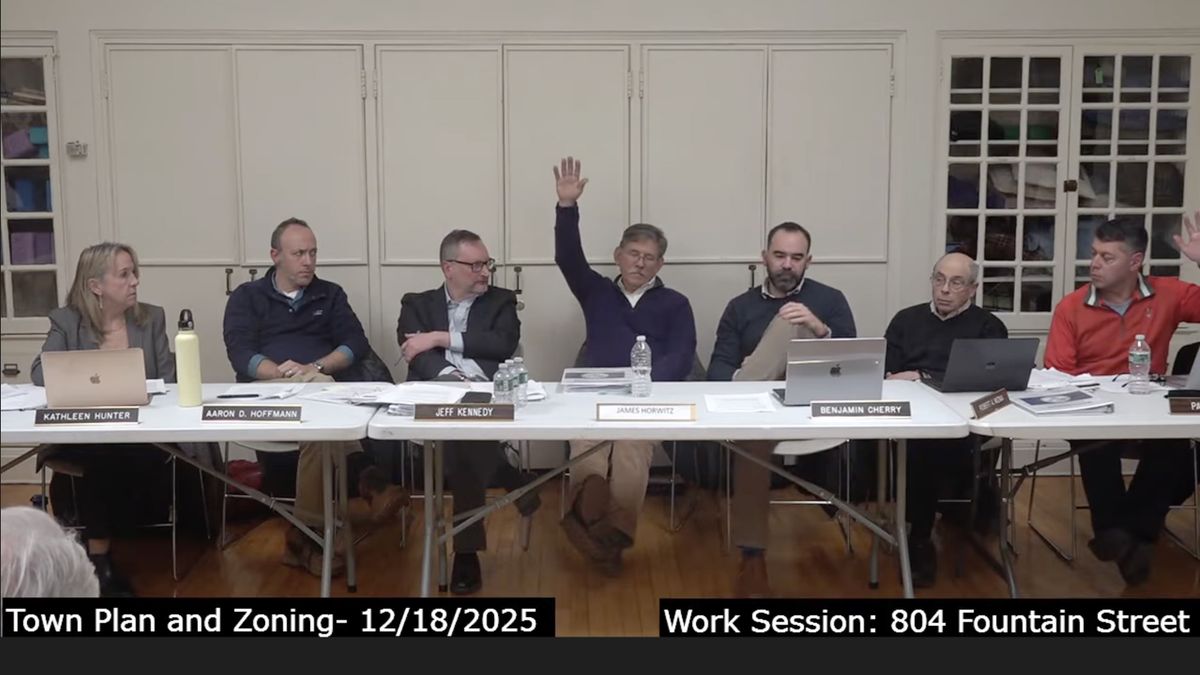
The Woodbridge Town Plan & Zoning (TPZ) Commission voted on December 18 to approve a proposed 96-unit multifamily development at 804 Fountain Street, concluding a months-long review process marked by extensive public input and detailed written submissions (see published material posted to the town website). The deliberations and vote revealed sharply divided views among Commissioners.
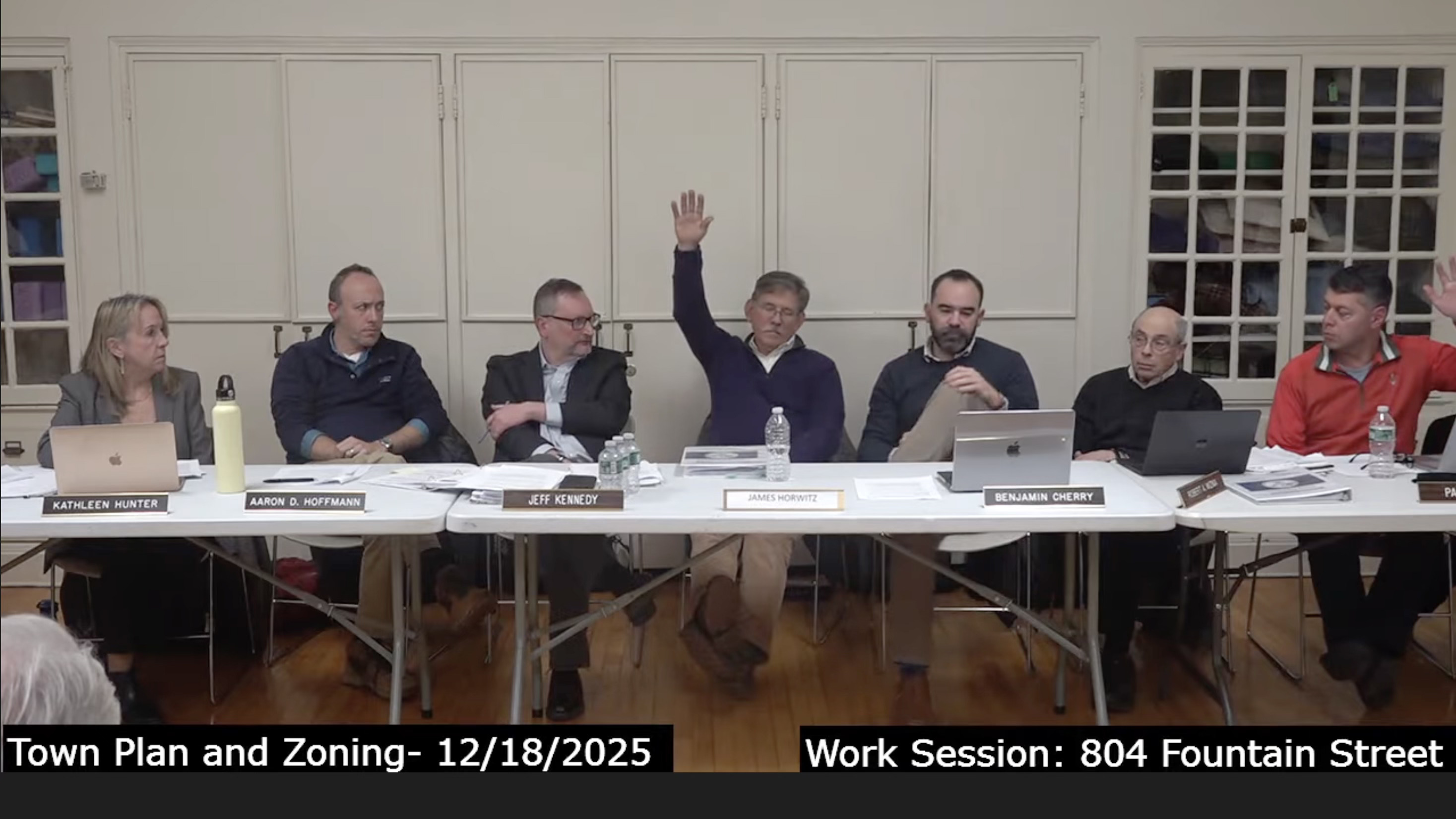
As the public hearing had already been closed, this special meeting was convened for discussion and decision only on three related applications: a special exception for construction of a four-story multifamily development, a special exception to allow a flat roof design, and a special permit for excavation and earth removal (see published agenda for details).
While the proposal itself has generated significant public attention, much of the Commission’s discussion focused on how TPZ understood its role under existing zoning regulations and state law — a framing that shaped the deliberations and ultimately informed the final vote.
Staff guidance and the scope of TPZ’s authority
At the outset of the meeting, the Commission addressed procedural issues related to recusals and alternate seating. One Commissioner was excused after having previously recused himself, and one alternate seat was vacant due to a prior resignation. The next alternate in the established rotation was seated to vote, over an objection from another alternate. Staff and the Town Attorney, who participated remotely, advised that the rotation followed long-standing practice and that the Chair has authority to seat alternates. The Chair elected to proceed using the established rotation.
In advance of the meeting, and again during deliberations, the Commission also relied heavily on guidance from Town staff — specifically the Town Attorney and the Town’s consulting planner — regarding the legal framework governing special-exception applications (see published Town Planner memorandum for details).
That guidance emphasized that TPZ was acting in an administrative, not discretionary, capacity, noting that under Connecticut law and Woodbridge’s zoning regulations, special-exception applications must be evaluated strictly against the standards written into the regulations. The Commission’s role, staff explained, is to determine whether the applicant has demonstrated compliance with those standards based on the evidentiary record developed through the application materials and the public hearing.
Under this framework, it was noted that if an application meets the required criteria, the Commission is generally expected to approve it, subject to reasonable conditions that address outstanding technical or documentation issues.
Intervenor arguments excluded
At the outset of the December 18 meeting, the Commission addressed requests for intervenor status from abutters. The discussion focused on whether the record contained substantial evidence that the project was reasonably likely to result in unreasonable environmental harm, as required under Connecticut law.
Commissioners concluded that the evidence presented did not meet that threshold, citing the absence of concrete proof that the development would unreasonably pollute, impair, or destroy natural resources. In doing so, they pointed to the applicant’s submitted stormwater management plans, erosion and sediment controls, and related environmental mitigation measures, and determined that the intervenors had not met the burden required for intervenor status.
As a result, intervenor participation was not accepted for purposes of the Commission’s deliberations, and TPZ limited its review to the application materials, staff reports, and testimony excluding material introduced by intervenors.
Commissioner debate over discretion and judgment
While staff’s interpretation provided the legal foundation for the review, not all Commissioners agreed on how narrowly TPZ’s role should be understood.
During discussion of the motion to approve, Commissioners questioned whether characterizing the Commission’s function as administrative risked understating the judgment required by the special-exception standards themselves. It was noted that while some zoning requirements are quantitative — such as density, setbacks, and parking ratios — the regulations also require TPZ to evaluate qualitative criteria, including public health and safety, traffic impacts, neighborhood harmony, and conformance with the Plan of Conservation and Development (POCD).
Staff guidance and the application materials appear to rely on the Town’s prior POCD, which expired in May 2025. That document — not the POCD adopted by the Commission on December 8 — was treated as the operative plan for zoning decisions at the time of review.
Closing remarks and vote
As deliberations moved toward a vote, Commissioner disagreement over how broadly TPZ should interpret its role was highlighted. Framing their thinking within the standards-based review outlined by staff, several members argued that because the Commission functions in a quasi‑judicial capacity, it is obligated to approve an application that meets the standards set forth in the zoning regulations, even if broader community concerns remain unresolved. From that perspective, they cautioned that denial would be difficult to defend if the record demonstrated regulatory compliance.
One Commissioner countered that TPZ retains discretion to weigh cumulative impacts and to consider whether compliance with minimum standards is sufficient when long‑term consequences for the town are at stake. Commissioners discussed whether concerns raised during the public hearing — including environmental impacts, site alteration, and downstream effects on infrastructure — warranted greater weight, even where technical requirements had been met. This disagreement over the scope of TPZ’s authority framed the discussion immediately preceding the vote.
In closing remarks before the vote, discussion included a caution that post-approval conditions should not substitute for affirmative findings on qualitative standards — including scale, public safety, emergency access, the volunteer fire department’s ability to serve the site, and site-specific risks associated with downhill or off-site effects including impacts associated with potential removal of the rock outcropping along Fountain Street. One Commissioner, who ultimately voted against the motion to approve, questioned whether the record fully supported those findings at the time of the vote, expressing continuing unease with the extent to which unresolved qualitative issues could be deferred to conditions.
The Commission ultimately voted to approve all three applications, subject to a detailed set of conditions addressing fire safety, stormwater management and post‑construction monitoring, affordability compliance, landscaping, bonding, and required agency approvals (see published meeting minutes for details). An amendment adopted prior to the vote clarified a requirement that the applicant purchase a ground ladder meeting NFPA 1931 standards and facilitate storage acceptable to the Woodbridge Fire Department.
The final vote was 4–2 in favor, reflecting persistent disagreement over the Commission’s role in applying zoning regulations versus weighing broader planning considerations. The decision represents one of the most consequential land‑use approvals of the year and may be subject to appeal. Under Connecticut law, zoning appeals must be filed within 15 days of the date the decision is published.
TPZ meetings are open to the public and recordings can be viewed on the town’s YouTube channel, WGATV79. Click below to watch the full December 18 meeting recording.
Editor’s note: This recap is written by Sheila McCreven in her role as editor of the Chronicle. Sheila is also an elected member of the Board of Selectmen (her term ends December 31, 2025). See the Editorial Note on Government Coverage on our About page to learn more.