Inland Wetlands Agency Never Got a Chance to Dip Its Toes in the Waters on Fountain Street
Guest opinion piece by a former member of Woodbridge's Inland Wetlands Agency
Guest Opinion By Steven C. Sosensky
Someone made the decision that the inland wetlands agency (the “commission”) did not have jurisdiction over the Fountain Street project, though I believe it did, requiring the filing of an application for permit approval. Just as concerning, a decision was also made to not even allow the commission to deliberate over whether it had jurisdiction over the project.
Determining wetland jurisdiction begins with the commission’s regulations and the Section 2.1 definition of “Regulated activity.” Conducting a regulated activity subjects a project to the commission’s jurisdiction. The commission is vested with, perhaps, the state’s broadest discretion to determine what conduct is a regulated activity as the definition states:
“The agency may rule that any other activity located within such upland review area or in any other non-wetland or non-watercourse area is likely to impact or affect wetlands or watercourses and is a regulated activity.”
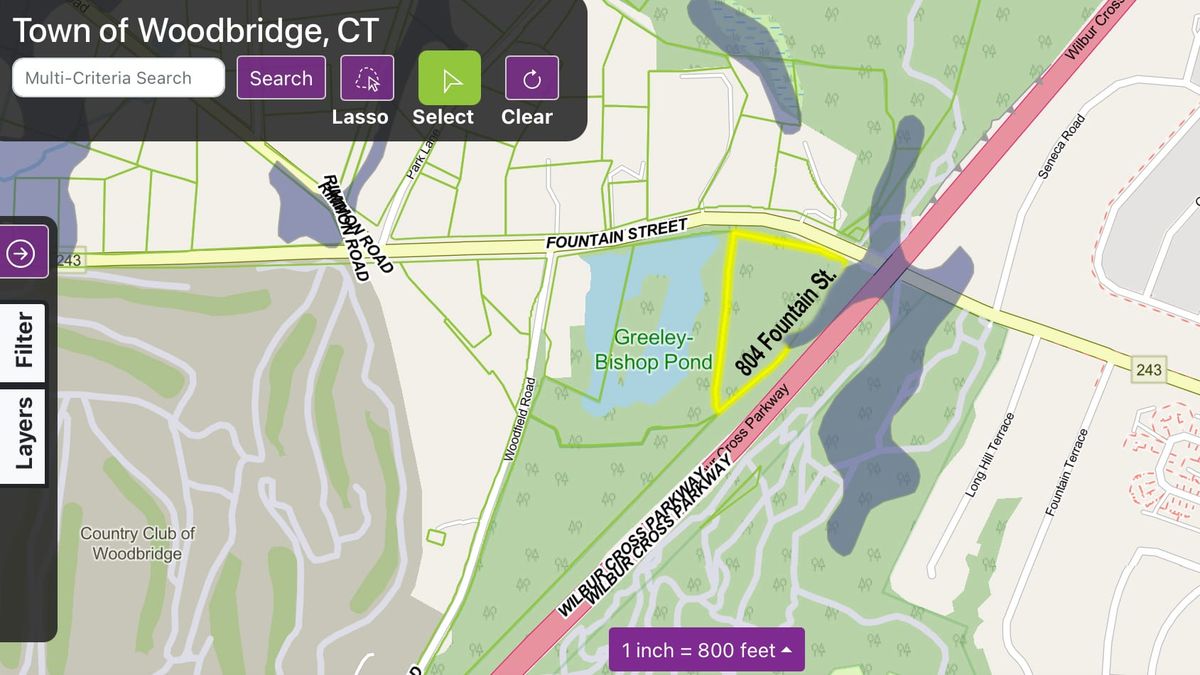
This project on 5.71 acres to construct a 96-unit apartment building and 145 parking spaces involved many of the traditional elements of regulated activity, to wit, “clearing, grubbing, filling, grading, paving, excavating, constructing, depositing or removing of material and discharging of stormwater,” on and from the property which is up-slope and adjacent to neighboring property with wetlands and watercourses.
Plus, to name more specific conduct and jurisdiction implicating activities, there will be blasting, cutting and removing of at least between 66,200 cu yards and 74,200 cu yards of rock and material, the risk of failures of sedimentation and erosion controls during and after construction, and, a 12-inch diameter discharge pipe from a 196,522 gallon underground stormwater handling system pointing directly down-slope and out-falling at a point within just feet from the upland review area of the adjacent wetlands and watercourses area.
Applying the definition of regulated activities to the activities proposed on the property, and given the commission’s broad authority to exert its jurisdiction over the project, it is both shocking and inexplicable that the commission appears to have been deprived of its jurisdiction here.
Appearing to support this conclusion is the recent Woodbridge Land Trust and the Woodbridge Park Association appeal of the Town Plan and Zoning Commission approval of the project since a number of the regulated activities and threats to the environment are cited in the appeal. The appeal alerts to “increased pollutant loads being discharged to regulated wetlands and watercourses, and associated ecosystems.”
So, beginning in March, 2025, I began to express an interest in the project as a commissioner, including requesting copies of the plans. Ultimately, I was told the wetlands and watercourses are off-site, outside the upland review area, and in New Haven (despite that they are connected to wetlands in Woodbridge); and, therefore, the project did not come before the commission, so to speak.
Following my review of the latest submittals on the project from September, October, and November, I planned to raise the matter of asserting the commission’s jurisdiction over the project formally at the December commission meeting. However, I never got a chance to do that because the commission’s December meeting was cancelled due to flooding in town hall (though I wonder why the commission could not have met at an alternate location).
Regrettably, since that canceled December commission meeting, TPZ approved the project, and I was not re-appointed to another term on the commission.
Now, anyone who watched the recent commission meeting involving the Beecher Road apartment project application, and saw the robust and relevant presentations of the intervenors and participation by the public, must be left scratching their heads about what may have been a different trajectory for the Fountain Street apartment project.
I believe the town deserved better than that from the commission on the Fountain Street project. Matters of inland wetlands and watercourses should not have been left undecided by the commission, only to be tangentially addressed by the TPZ, which is not its jurisdiction, nor its expertise. The town and its citizens were entitled to the protections of the commission’s regulations and their protection of the indispensable and irreplaceable but fragile natural resource with which the citizens of the town have been endowed for their benefit and enjoyment, and for the benefit and enjoyment of generations yet unborn.
Who made the decision to deprive the commission of jurisdiction over the Fountain Street project, how was that decision made, and why was the commission deprived from dipping its toes in those waters?
— Steven C. Sosensky
Former Inland Wetlands Commissioner
Editor’s Note:
Both Community Voice guest opinion pieces and Letters to the Editor reflect the views of their authors and not necessarily those of the Woodbridge Town Chronicle. Submissions are reviewed and curated by the editor. Learn more about our submission process by reading the Submissions and Editorial Guidelines.