Community roundtable addresses zoning, housing, and public process
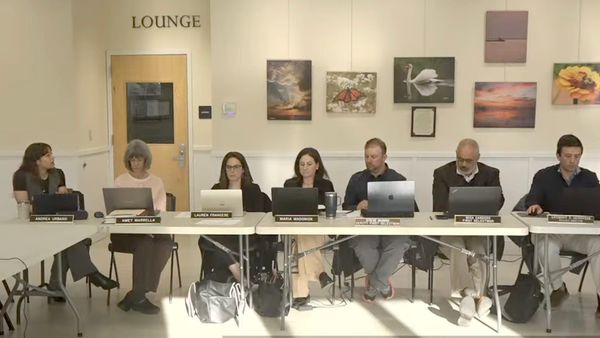
Residents gathered at the Woodbridge Town Library for an event hosted by A Common Ground for Woodbridge

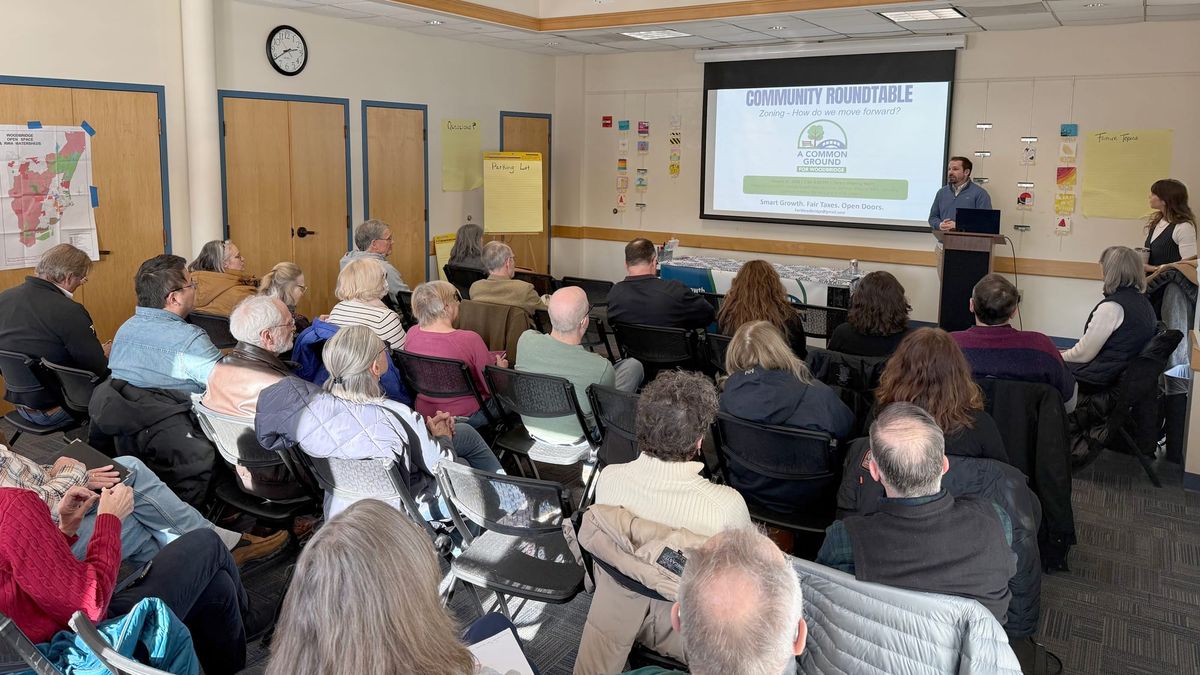
Residents gathered at the Woodbridge Town Library for an event hosted by A Common Ground for Woodbridge
About 50 residents gathered Saturday afternoon, January 31, at the Woodbridge Town Library for a community roundtable hosted by A Common Ground for Woodbridge, a political committee formed during the 2025 municipal election that is now hosting public talks on local issues.
The session was led by Rob Rosasco, who described the event as the first in a planned series of public forums focused on information-sharing and community input. He was joined by Selectmen Andrea Urbano and Amey Marrella, who had been his running mates in the recent election and participated actively throughout the presentation and discussion.
From the outset, speakers emphasized that the session was intended as an open conversation rather than a formal presentation. Questions from the audience were welcomed throughout, and participants frequently interjected to ask for clarification or to offer observations drawn from their own experiences.
From campaigning to convening community forums
Rosasco opened by explaining how the group had evolved since last spring. Originally formed as a political committee to support a slate of candidates with diverse political affiliations, the committee’s electoral activity concluded after the November election, as required by state law. According to Rosasco, who had been the group’s candidate for First Selectman, feedback from residents afterward prompted organizers to shift their focus from electoral politics to community education and dialogue. A Common Ground for Woodbridge is registered with the Woodbridge Town Clerk as a political committee.
The group now describes itself as a forum for residents to learn about town issues, share perspectives, and identify areas where public input may help inform local decision-making.
Zoning context and state pressures
Much of the afternoon focused on zoning and housing policy, beginning with an overview of Woodbridge’s zoning map and watershed constraints. Rosasco reviewed how most of the town is zoned residential, with a smaller business district subject to multiple zoning classifications, public water and sewer availability, and watershed protections.
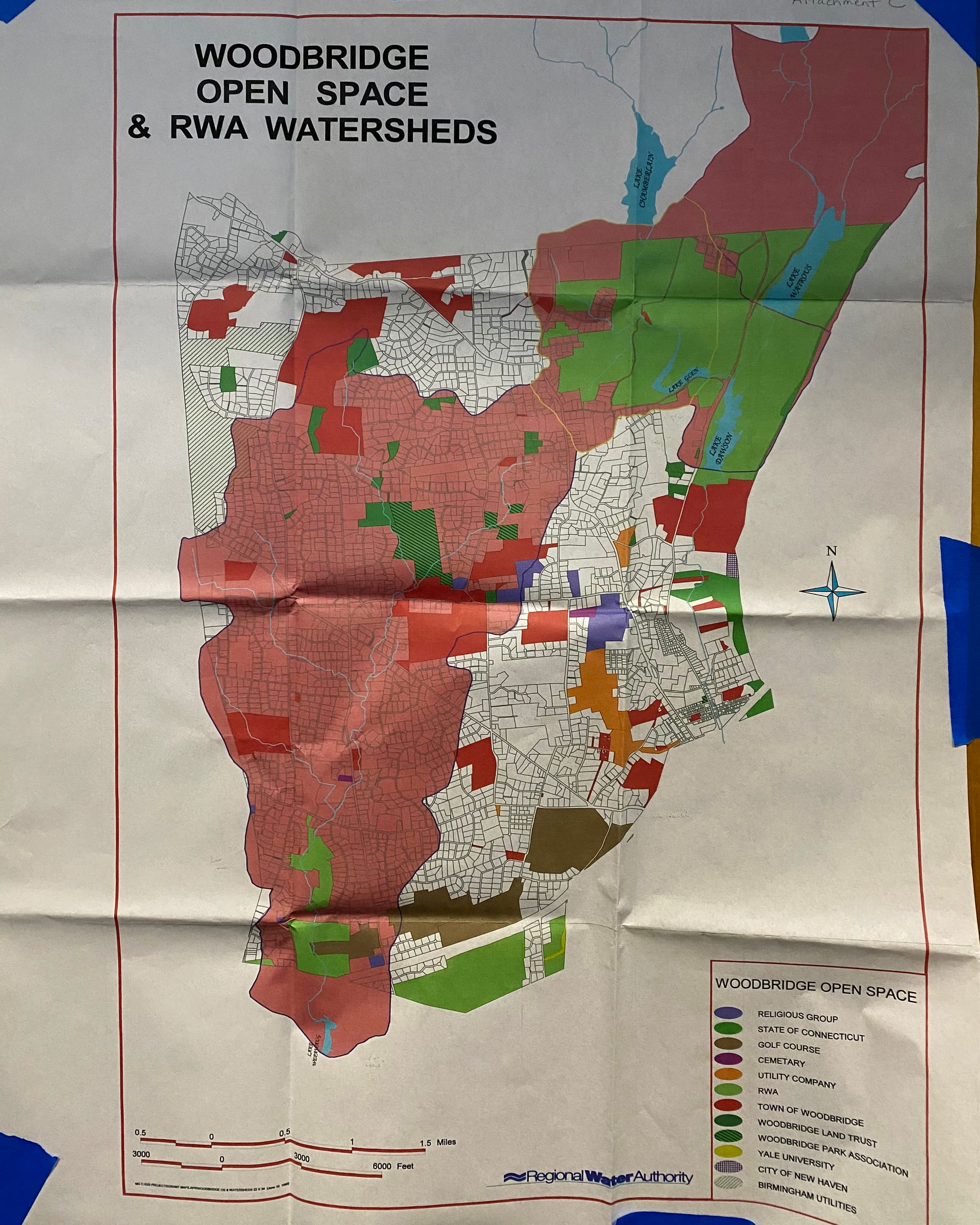
The discussion then turned to Connecticut’s affordable housing statute, commonly known as §8-30g. Speakers described the statute as a long-standing framework that allows developers to appeal local zoning denials in towns that have not met the state’s benchmark for affordable housing, while also noting tools available to municipalities, including temporary moratoria, to manage development pressure.
Several participants referenced recent zoning changes adopted in Woodbridge, including the town’s allowance of accessory dwelling units (ADUs) and duplexes townwide, and higher-density multifamily development in limited areas outside the public watershed. These changes, speakers noted, significantly altered what may be built in certain parts of town.
Audience members asked questions about how these regulations work in practice, including eligibility requirements for ADUs, deed restrictions, and how affordability is defined under state law.
Critiques of recent planning documents
Speakers and audience members alike raised concerns about recent planning efforts, particularly the town’s 2022 Affordable Housing Plan and the 2026-2036 Plan of Conservation and Development (POCD).
Criticism focused less on the goals of those documents than on the process by which they were developed. Several participants said the plans did not sufficiently reflect public input and were prepared under tight deadlines that limited meaningful community engagement. Some noted that while surveys had drawn significant participation, residents felt their feedback was not fully incorporated into final documents.
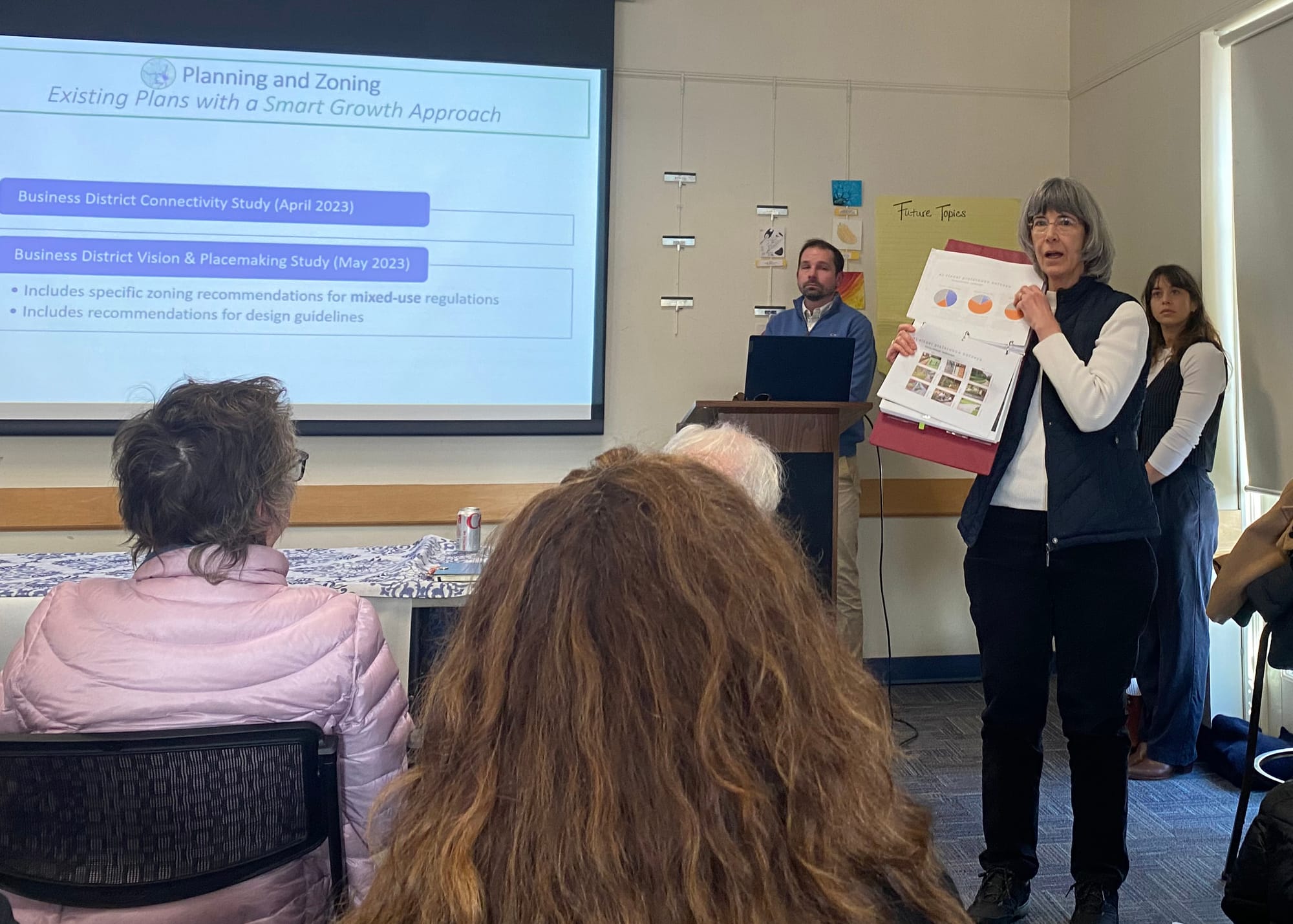
By contrast, speakers highlighted earlier planning efforts — including studies conducted as part of the Town's Business District Connectivity and Placemaking efforts lead by the ad hoc 2030 Task Force — as examples of more robust public engagement.
A shared vision centered on process and incremental change
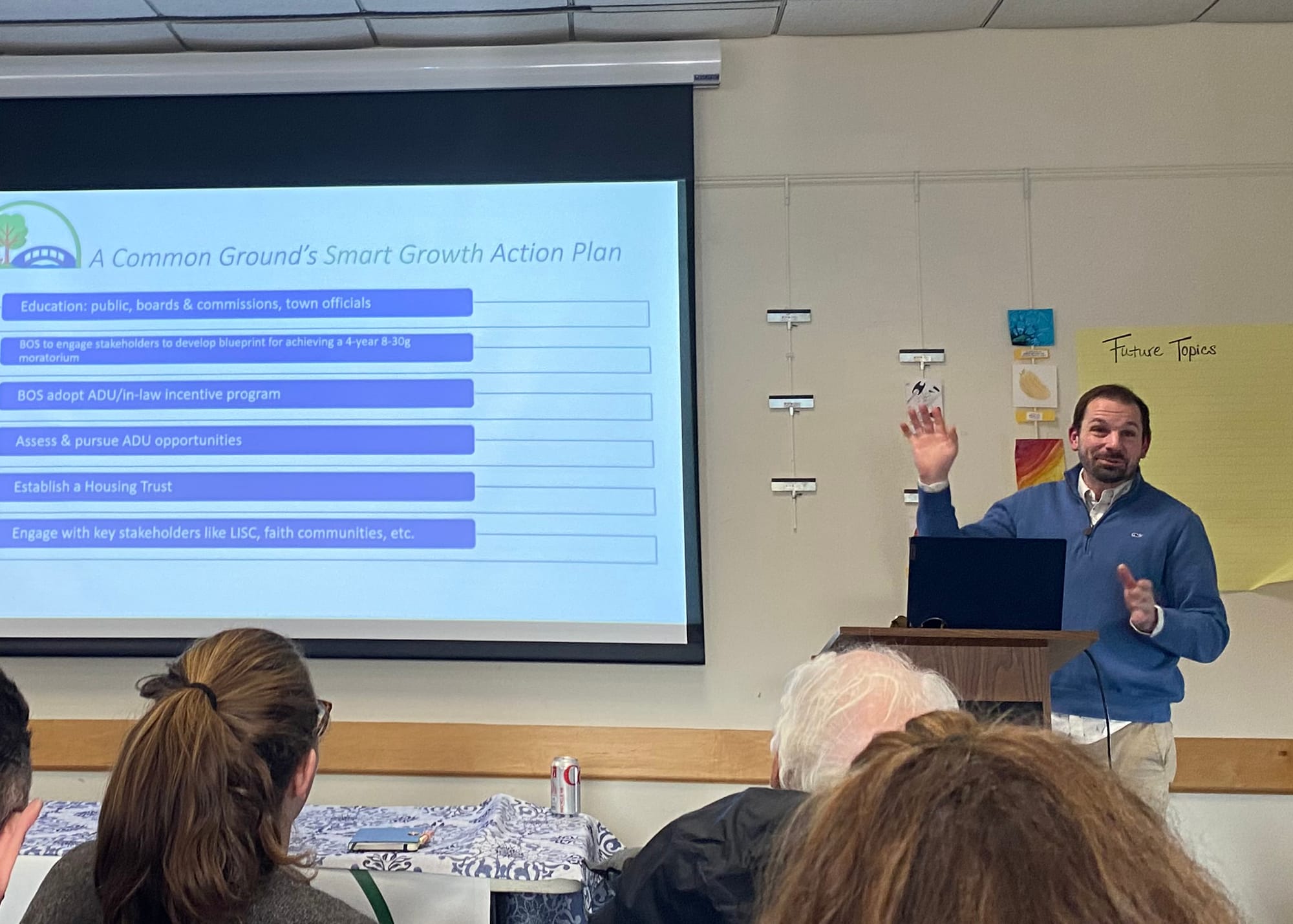
In closing, Rosasco outlined what he described as a “Smart Growth Action Plan” — a framework focused less on specific development proposals and more on public process, education, and incremental policy steps.
Slides projected during this portion of the presentation emphasized expanded education for residents, boards, commissions, and town officials; greater coordination among boards; and deliberate efforts to engage stakeholders ranging from local institutions to faith-based organizations. Several recommendations centered on zoning tools already in place, including encouraging use of accessory dwelling units through incentives, assessing existing housing opportunities, and exploring the creation of a local housing trust.
The plan also called for revisiting planning documents through what presenters described as a more inclusive process, with public input shaping revisions to the Plan of Conservation and Development and zoning regulations — particularly in the business district. Participants stressed the importance of design guidelines, affordability requirements for multifamily developments, and a clearer roadmap for how the town might navigate state affordable housing statutes over time.
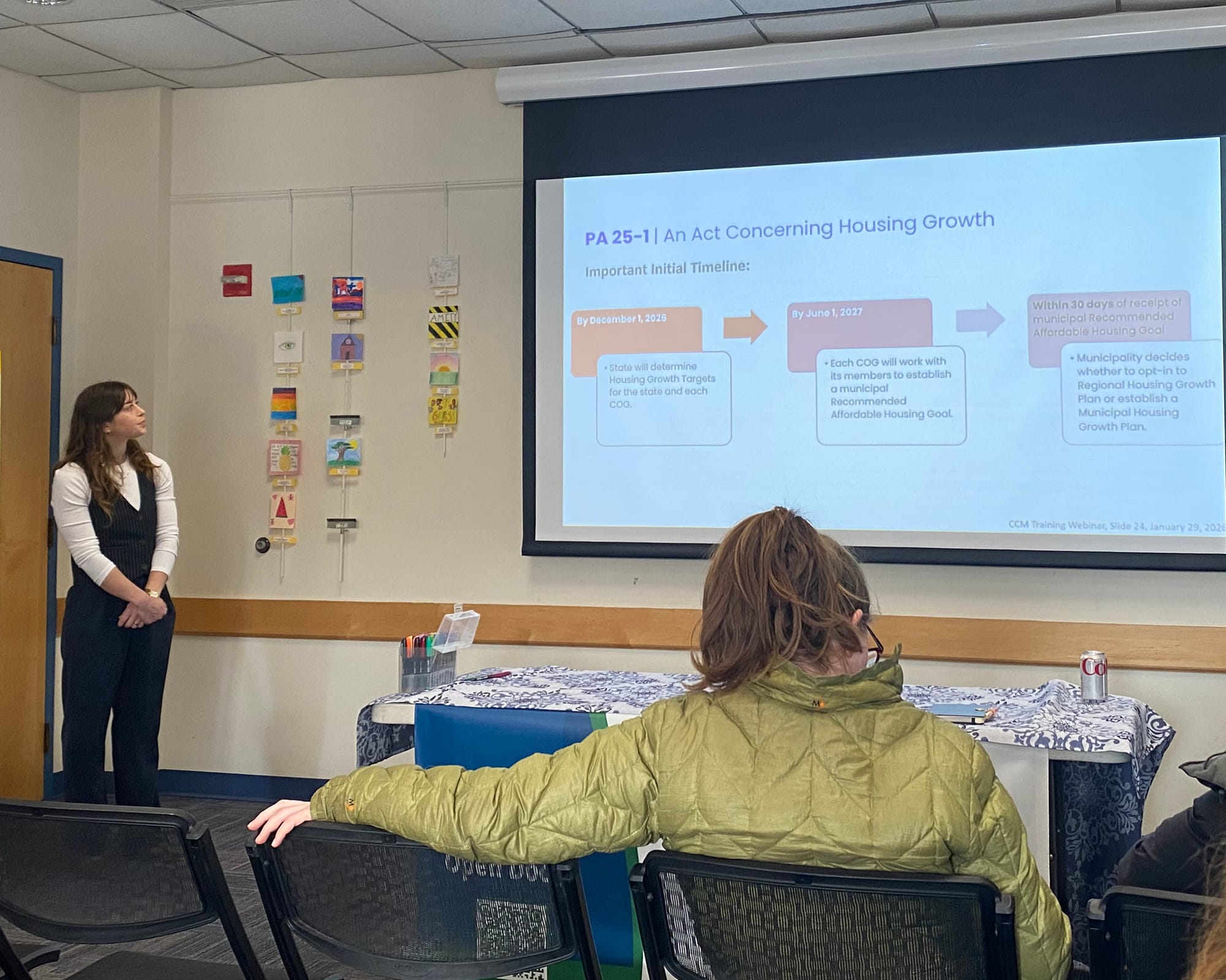
Marrella also referenced a presentation hosted the previous day by the Connecticut Conference of Municipalities (CCM) that reviewed the state’s new housing law adopted during the 2025 special legislative session, Public Act 25-01. Slides from that presentation, one of which was displayed during the roundtable (see above), outlined an initial timeline under the new law, including the state’s role in setting housing growth targets, the development of recommended affordable housing goals through councils of governments (COGs), and subsequent municipal decisions on whether to participate in a regional housing growth plan or establish a local plan. It was noted that Woodbridge is part of the South Central Regional COG — more information is available on the SCRCOG website, including a guide to public participation published in 2025.
Marrella said the CCM session provided useful context for understanding how the new law is expected to be implemented and noted that she has encouraged the First Selectman to make detailed, accessible information of this nature available to residents through the town website, so the public can better understand the state framework within which local housing decisions are now being made. Information about the CCM session referenced during the roundtable — which reviewed implementation of the state’s new housing law — is available on the organization’s website.
Throughout the discussion, organizers framed their approach as pragmatic and incremental, emphasizing transparency, resident engagement, and an effort to balance growth pressures with Woodbridge’s environmental constraints and community character. Participants were invited to suggest future discussion topics, signaling that the roundtable series is intended to continue as an ongoing forum rather than a one-time event.
Update: the recording of the CCM session discussed at the Common Ground Community Roundtable is now available to watch on YouTube.