Charter revision process begins with first public hearing as early fault lines emerge
Residents raise concerns about longer terms and call for limits on concentrated power and expanded voter voice, including referendum on budgets and public land decisions

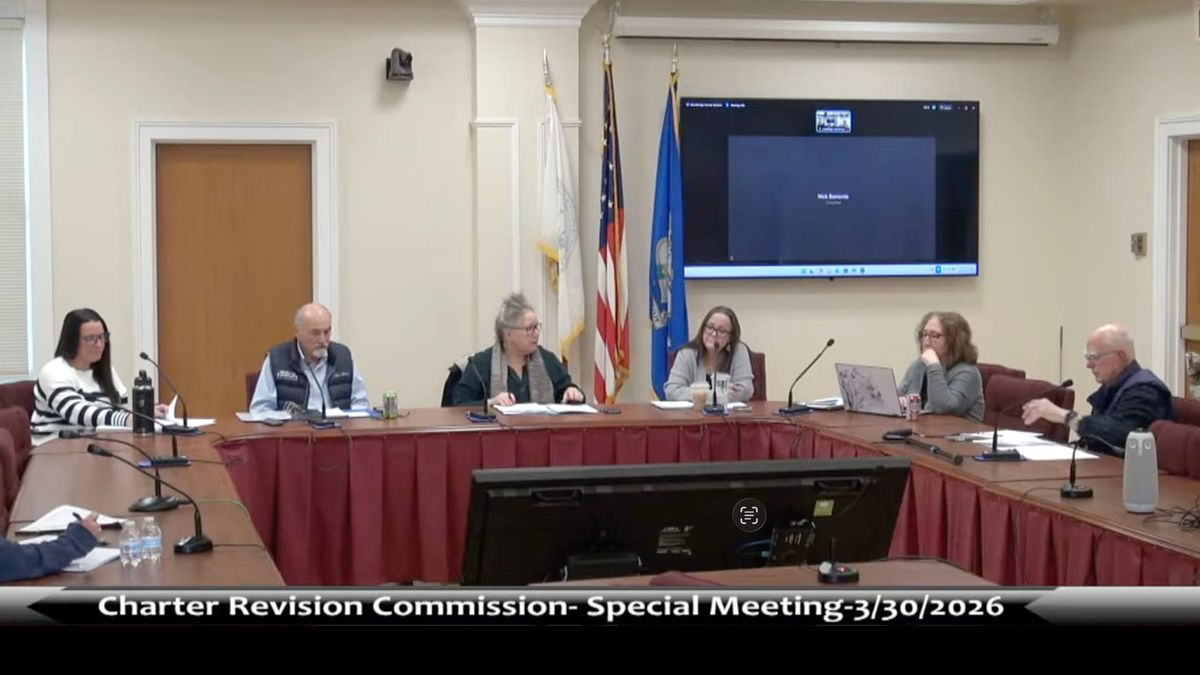
After an initial organizational meeting in February, the Charter Revision Commission continued its work on March 30 with a special meeting and its first public hearing — an early step in a process that could lead to changes in how Woodbridge governs itself and shape town governance for years to come.
The meeting, held at Town Hall, focused largely on organization and arrangements for public input rather than specific proposed revisions — a signal that the commission remains in the early stages of its review.
But what emerged from the public hearing was not simply routine feedback on a technical process. The hearing quickly surfaced deeper questions about how the town is governed, revealing early fault lines — underlying tensions just beneath the surface — around where authority should reside, how decisions reach voters, and how accountability is maintained. Those issues are likely to shape the direction of the commission’s work in the months ahead.
A deliberate start to the process
The Charter Revision Commission consists of seven members appointed by the Board of Selectmen: Susan Jacobs (Chair), David Vogel (Vice-Chair), B. Patrick Madden (Secretary), Cynthia Anger, Melissa Durso, Nicole Donzello, and Jeffrey Ginzberg. The group is tasked with reviewing the town’s governing document and recommending any proposed changes for voter consideration.
After acting in January to create the commission and appoint its members, the Board of Selectmen also agreed at its February 11 meeting to convey formal recommendations and a charge to guide the commission’s work. While the commission's consideration is not limited strictly to those items, it is required to respond directly to each recommendation transmitted by the Selectmen. The substance of those instructions is expected to shape the scope of the review.
Those materials do not appear to be available on the town website at press time, limiting public visibility into the scope of the Selectmen’s guidance.
Chair Susan Jacobs opened the March 30 commission meeting by outlining a practical approach: commissioners will begin by reading the existing charter in full before identifying areas for potential revision. There was broad agreement among members that much of the current charter may remain unchanged, suggesting the group anticipates a targeted — rather than sweeping — set of recommendations.
The charter revision process follows a structured sequence under state law. The commission reviews the existing charter, gathers public input, and develops proposed changes before issuing a draft report and holding required public hearings. It then must submit its final report to the Board of Selectmen by January 29, 2027, after which the Selectmen determine which proposals, if any, are placed on the ballot. Any Charter revisions must ultimately be approved by voters — anticipated here to coincide with the November 2027 municipal election.
The commission’s role was described as advisory, with final decisions resting with the Selectmen. As Jacobs explained, “We are a filter… ultimately the Board of Selectmen accepts the charter revision report and votes to schedule a referendum for the public to vote yay or nay on those revisions.”
That structure — with the commission serving in a screening role and the Selectmen determining what reaches voters — was at the heart of several public comments, where residents questioned how much decision-making authority should rest with elected officials versus voters directly, and pointed to expanded referendum rights and citizen petition mechanisms as ways to give voters a more direct role in key decisions.
Public hearing draws early input
The commission recessed its meeting and reconvened at 7:00 p.m. for its first public hearing, where residents were invited to offer comments, with a three-minute limit per speaker. Residents who spoke in person highlighted a range of perspectives, with recurring themes emerging around accountability, board structure, and the role of voters in decision-making:
Al Smith urged that the Board of Selectmen retain authority to appoint the town attorney and opposed extending elected terms from two to four years, citing concerns about maintaining accountability.
Kristyna Hulland (current member of the Agriculture Commission) advocated for multi-year farmland leases, emphasizing the importance of stability for local agricultural use.
Martha German opposed extending terms to four years and emphasized protecting voters’ role in town governance, particularly the ability to hold elected officials accountable more frequently.
Charles Swanson (former member of the Town Plan and Zoning Commission) raised concerns about board representation, questioning whether proposed changes might affect how effectively different viewpoints are represented and whether they could concentrate decision-making authority.
Amey Marrella (former First Selectman and current Selectman) supported structural reforms and accountability measures and opposed extending terms, raising concerns about reduced voter oversight (see written submission below).
Cathy Wick focused on citizen petition rights and opposed extending terms, emphasizing the importance of preserving mechanisms for direct public input (see written submission below).
Rob Rosasco supported referendum and expanded public participation, highlighting the value of giving residents a more direct role in major decisions.
Bill Silberberg (former member of the Amity Board of Education) supported maintaining two-year terms, citing the importance of regular voter engagement and accountability.
Liz Chicos emphasized transparency and communication, calling for clearer processes and better public understanding of town decisions.
Bob Hill (former member of the Rec Commission and current member of the Economic Development Commission) raised concerns about accountability, particularly in how decisions are made and communicated to residents.
Andrea Urbano (former member of the Agriculture Commission and current Selectman) supported expanded voter participation, emphasizing the importance of ensuring residents have a meaningful voice in key decisions.
Written testimony received
Ahead of the public hearing, residents also submitted written comments (this submitted material is available on the town website), reflecting many of the same themes raised during the hearing, along with additional perspectives:
Sonia Caban and Francis Donnelly opposed extending the term of the First Selectman from two to four years.
David Lober (former Selectman and current member of the Housing Commission) supported requiring voter approval for the sale of public land and facilities, emphasizing that assets purchased with taxpayer funds should remain under taxpayer control.
Maria Madonick (former member of the Woodbridge Board of Education and current Selectman) proposed administrative and governance updates, including changes to transition timing for newly elected officials and succession planning for the Board of Selectmen.
Amey Marrella (former First Selectman and current Selectman) supported a series of structural reforms to reduce concentrated authority, including eliminating tie-breaking powers for the First Selectman, electing members of key boards, expanding use of referendum, and strengthening checks and balances in town governance.
Robert McLean opposed extending terms for elected officials, emphasizing the importance of maintaining two-year cycles to preserve direct accountability to voters.
Sheila McCreven (former Selectman and current editor of the Woodbridge Town Chronicle) proposed adding charter-level protections for public comment, emphasizing First Amendment standards and the importance of preventing viewpoint discrimination in public meetings.
Stacey Smith opposed extending the First Selectman’s term to four years, citing concerns about consolidation of power.
Cathy Wick supported expanding democratic safeguards, including strengthening citizen petition rights, clarifying and broadening access to referendum, and ensuring greater Board of Selectmen oversight of key appointments and decisions.
What comes next
The commission will continue its review of the existing charter, with members planning to work through the document in detail at upcoming meetings before identifying specific areas for potential revision. Future meetings are expected to include additional opportunities for public input as draft proposals begin to take shape.
The next meeting will continue this initial review phase, with commissioners expected to begin identifying areas for potential revision as the process moves from orientation into substantive discussion. The commission’s next meeting is scheduled for Wednesday, May 6, 2026, at 6:00 p.m.
Members of the public may also submit comments by email to ctrzaski@woodbridgect.gov by 3:00 p.m. on the day of the meeting, with a copy to the Town Clerk at townclerk@woodbridgect.gov.
The Charter Revision Commission meeting and public hearing were open to the public and streamed live on the Town’s YouTube channel, WGATV79. Click below to watch the full recording of the March 30, 2026 meeting and hearing.