Budget season begins with first two joint meetings of Selectmen and Finance
Initial framework for FY2027 discussed as sessions focus on setting a baseline for town operations ahead of school budget reviews

Initial framework for FY2027 discussed as sessions focus on setting a baseline for town operations ahead of school budget reviews
As Woodbridge’s annual budget-setting process gets underway, the first two joint meetings of the Boards of Selectmen and Finance have focused on establishing a baseline for town operations — ahead of upcoming sessions taking place later this week that will feature the much larger school budget requests.
Setting the stage for the FY2027 town budget
As the town embarks on the preliminary steps with these budget presentations, it is helpful to keep in mind how — and where — local officials exercise discretion over spending and tax impacts, and how the early joint budget meetings fit into the larger picture that residents ultimately experience through their tax bills.
While many factors that shape property tax bills are outside local control — including state mandates and market-driven assessment changes — the Boards of Selectmen (BOS) and Finance (BOF) play a central role in determining how much the Town spends and how quickly that spending grows. The annual budget process is the primary mechanism through which that responsibility is exercised.
Education spending, when the budgets of the Woodbridge and Amity school districts are combined, accounts for roughly two-thirds of all municipal spending. As a result, school budget requests play a decisive role in shaping the overall tax rate. Those budgets will be presented in upcoming joint meetings later this week on January 27 and January 29 (see links to agendas, below).
By contrast, the first two joint budget meetings focused primarily on non-school departments and town operations. While these accounts represent a smaller share of total spending, they establish the baseline from which the larger education budgets are layered. Understanding this early phase helps clarify where flexibility exists, where costs are largely fixed, and how incremental decisions accumulate over time.
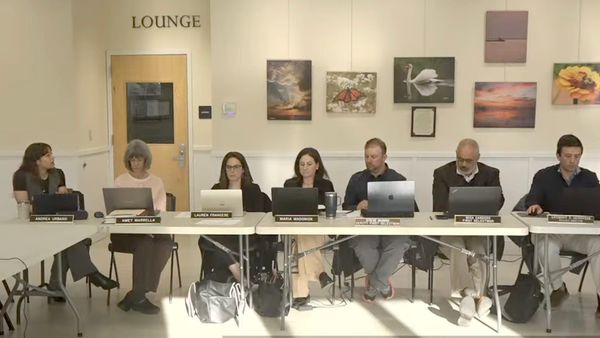
The joint budget meetings are open to the public and recordings can be viewed on the town’s YouTube channel, WGATV79. Click below to watch the full January 20, 2026 and January 22, 2026 meeting recordings.
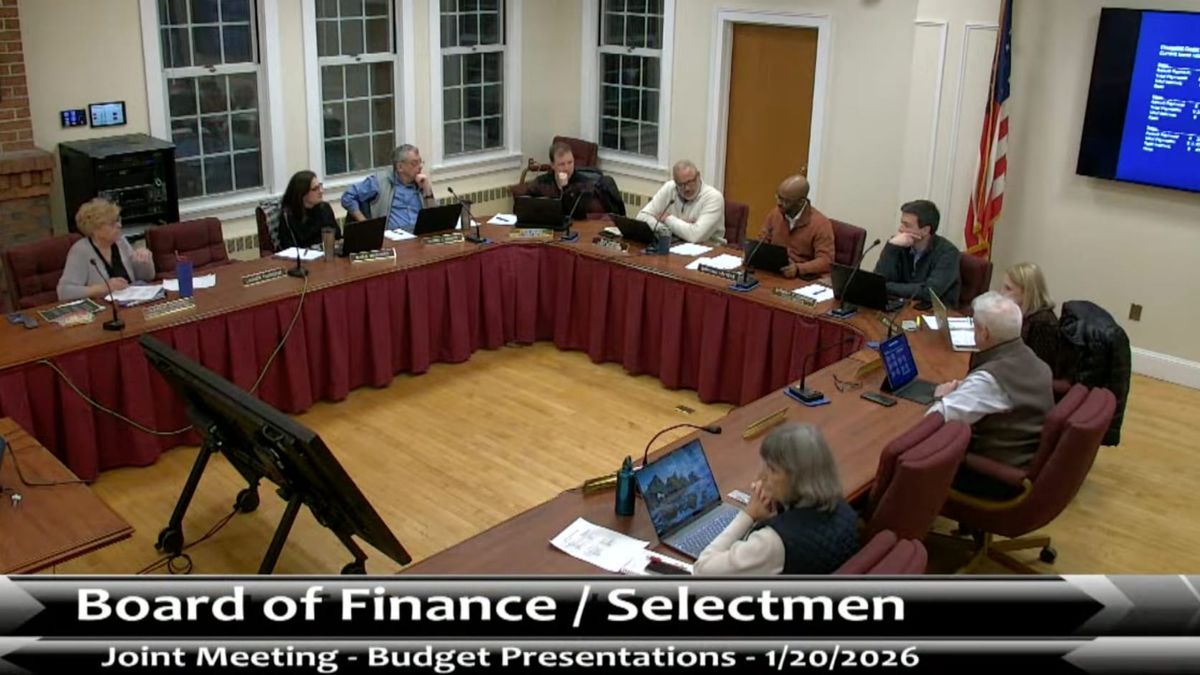
Joint budget meeting #1 on January 20th
On January 20, the first of four joint budget meetings opened with a time-sensitive capital financing decision related to the Fire Department’s new aerial apparatus, followed by the first round of operating and capital budget presentations from town departments. The apparatus is being acquired as a recently manufactured but unused vehicle, reducing costs compared with ordering a new truck. The boards acted on bid waivers and financing authorizations necessary to proceed.
Other departments presenting during this session included Building Maintenance, Parks, the Tax Collector, the Assessor and Board of Assessment Appeals, Recreation, Emergency Medical Services, the Center, and the Cultural and Community Center. Presentations focused largely on maintaining existing service levels, routine capital needs, and workload trends rather than program expansions.
Joint budget meeting #2 on January 22nd
The second joint meeting on January 22 shifted the focus to core administrative functions and regulatory bodies — areas that together account for a significant share of structurally constrained spending.
The Town's Administrative Officer and Finance Director Anthony Genovese reviewed operating and capital budgets for departments including General Administration, Information Systems, Finance, Debt Service, and Employee Fringe Benefits. Several costs discussed, such as the Probate Court assessment, are formula-driven and rise automatically with the recent changes to the town’s grand list following revaluation.
Additional presentations from the Conservation Commission, Economic Development Commission, Human Services, Town Plan and Zoning, Inland Wetlands, the Town Clerk, and the Registrar of Voters highlighted the staffing and administrative capacity required to meet statutory obligations and regulatory workloads. While these accounts do not drive the largest increases, they illustrate how baseline operational costs accumulate across the budget.
What’s coming next
The remaining joint budget meetings will shift attention to the largest spending components in the town budget, as well as several additional departments.
On Tuesday, January 27, the Woodbridge Board of Education will present its operating and capital budget request, along with budget presentations from the Thomas Darling House, Police Commission, Animal Control, Building Department, Library, Public Works, and Waste Management.
On Thursday, January 29, the agenda includes the Fire Commission, the Amity Regional School District budget request, and a review of town revenue assumptions by the Board of Selectmen.
Together, the Woodbridge and Amity school budgets account for roughly two-thirds of all municipal spending. Coverage of those meetings will follow, with additional reporting as the budget process moves toward the Board of Selectmen’s recommendations and the Board of Finance’s actions to set the preliminary budget.