Beecher Building Committee outlines path toward possible school project application
BIUBC meeting discussion highlights grant eligibility, required approvals, and affordability considerations

BIUBC meeting discussion highlights grant eligibility, required approvals, and affordability considerations
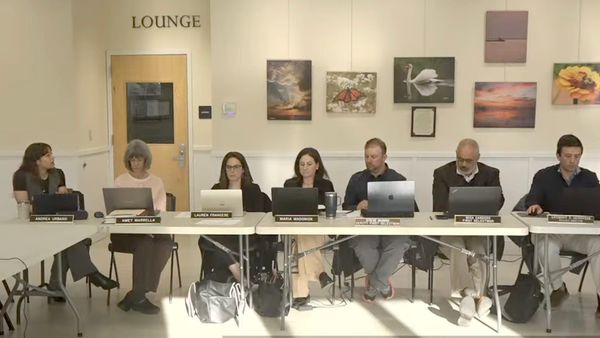
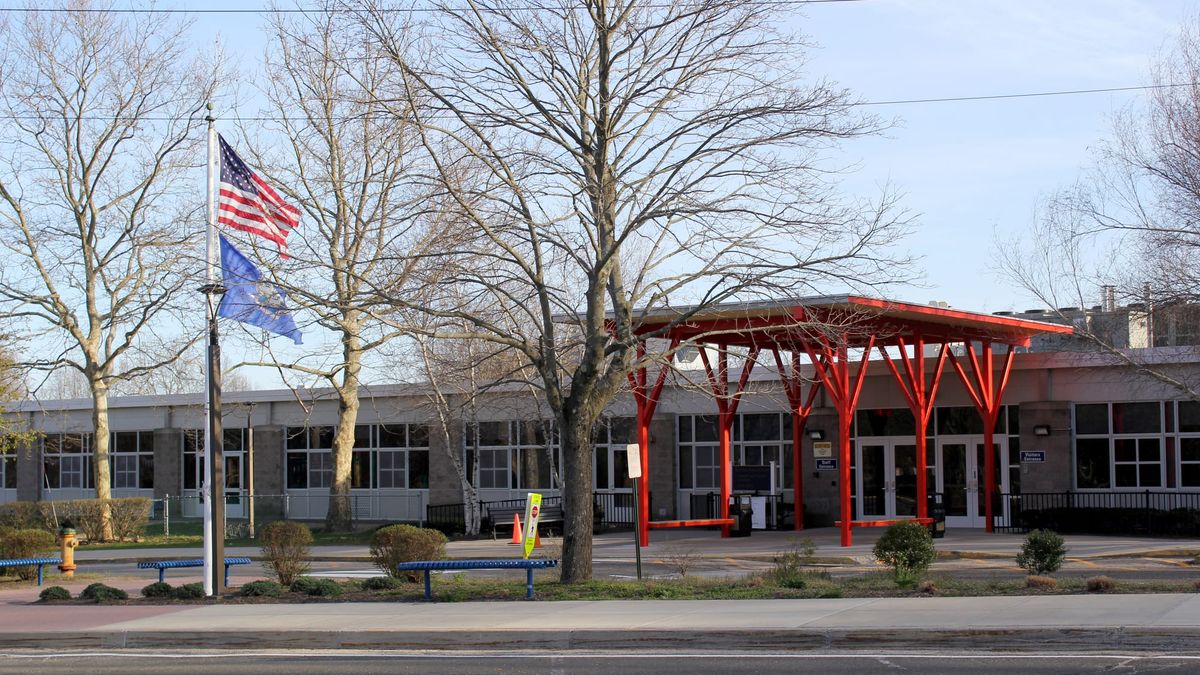
The Beecher Road School Infrastructure Upgrade Building Committee held a special meeting on January 21 to regroup following its September 18th presentation at the Tri-Board meeting and to review next steps toward a potential state school construction grant application (see previous coverage of the Tri-Board meeting for details).
The committee, which serves in an advisory capacity, is charged with evaluating options to address three longstanding challenges at Beecher Road School: aging infrastructure, insufficient classroom and program space, and projected enrollment over the next several years. Because the meeting lacked a quorum, no motions were made and no votes were taken. Members present instead received updates, reviewed the committee’s work to date, and discussed the procedural path ahead.
The meeting’s discussion unfolded against the backdrop of a newly released 2026 state school construction priority list, highlighting how widely state reimbursement rates can vary based on municipal wealth. This year’s approved projects range from communities eligible for reimbursement approaching 80 percent to wealthier towns qualifying for rates in the low teens.
At the meeting, committee members noted that certain project components — including eligible special education space and preschool facilities — may qualify for additional state reimbursement incentives under current Department of Administrative Services (DAS) guidelines, though the availability, timing, and durability of those incentives are subject to state policy and future legislative action.
Grant application timeline and required approvals
The committee’s renewed work is occurring alongside the Town’s annual budget process. Capital planning has already begun at the first two of four joint meetings of the Board of Selectmen and Board of Finance, with additional joint meetings scheduled for January 27 and January 29 (see related article).
At the meeting, committee members reviewed the process required to move forward with a possible June 30, 2026 state grant application. The review was led by the committee’s BOS liaison, Maria Madonick. She noted that while much of the preliminary work — including educational specifications, conceptual plans, and cost estimates — has already been completed, multiple formal approvals would still be required before an application could be submitted by the June 30, 2026 deadline, while some could take place after June 30.
Those approvals would include a resolution from the Woodbridge Board of Education to go to the BOS for their review and approval. Then the BOS would be expected to forward the proposal to the Board of Finance for review before it could go to the next step. Ultimately, any selected project would also require voter approval, a process that begins with a Town Meeting which may also require a townwide referendum vote to approve the expenditure of funds to be bonded.
Committee members emphasized that the committee’s role is to recommend an option for consideration; final decisions would rest with the Town’s elected boards and voters.
Discussion of options and constraints
During the discussion, members revisited the range of options previously presented, noting that while infrastructure-only repairs could address some immediate needs, they would not resolve space limitations or projected enrollment pressures. Other options under consideration would address all three challenges but would require broader coordination and community support.
Members also discussed the availability of state reimbursement incentives — including additional reimbursement for special education space and preschool expansion — and noted that while those incentives remain available at present, their duration is uncertain.
Questions were raised about how recently approved or proposed housing developments might affect future enrollment projections. Committee members noted that prior population studies suggest limited impact but agreed that updated local analysis may be needed as part of any final recommendation.
Community engagement and communication
A significant portion of the discussion focused on the need for clear and sustained public communication if the committee ultimately recommends moving forward with a major project. Members acknowledged that earlier efforts to bring residents into the school for tours and presentations drew limited participation, despite ongoing communication about concerns regarding the building’s underlying condition.
Several members expressed support for potentially engaging outside assistance in the form of contracted services to help explain the challenges, options, and tradeoffs in a way that is accessible to the broader community. No decisions were made on this topic.
The committee plans to revisit these discussions at a future meeting, at which time it expects to formally review the information again and consider whether to advance a recommendation to the Town’s boards. The meeting was adjourned by unanimous consent at approximately 6:30 p.m..
State reimbursement and what it means for Woodbridge
Earlier this month, the Connecticut Department of Administrative Services released its revised 2026 School Construction Project Priority List, identifying six school projects statewide eligible for new state grant funding that were submitted last year for approval. The projects span a wide range of communities — from Waterbury and Norwich to Westport — and illustrate how dramatically state reimbursement rates can vary based on municipal wealth.
Under Connecticut law, the share of a school construction project’s cost eligible for reimbursement is determined by a town’s school construction reimbursement rate, calculated using a wealth-based formula that begins with adjusted equalized net grand list per capita (AENGLC) as a core measure of municipal capacity. In general, wealthier towns qualify for lower reimbursement percentages, while less wealthy communities receive substantially higher levels of state support.
This year’s priority list reflects that range clearly, with reimbursement rates spanning from nearly 79 percent for Waterbury’s Roberto Clemente School project to approximately 11 percent for Westport’s new Long Lots Elementary School. Westport’s project, estimated at $110 million, the largest on the list — is slated to receive about $12.2 million in state funding, leaving roughly $98 million in costs for the town to raise locally.
Similar to Westport, Woodbridge’s wealth profile — reflected in its relatively high property values and income —results in a low potential reimbursement rate, meaning a substantial share of any Beecher Road School project would fall to local taxpayers.
At the same time, Woodbridge and Westport differ significantly in fiscal capacity. The typical Woodbridge home is valued at roughly $650,000 to $730,000, depending on the data source, while average home values in Westport are frequently cited above $1.8 million to $1.9 million. Westport’s grand list — the total taxable base used to fund local services — exceeds $11.6 billion, supported not only by high residential values but also by a sizable commercial and personal property base. By contrast, Woodbridge’s net adjusted grand list is approximately $1.67 billion, reflecting a much smaller tax base and heavier reliance on residential property taxes. In practical terms, Westport’s taxable base is roughly seven times larger than Woodbridge’s, meaning that the same share of unmatched school construction costs would translate into a significantly greater tax burden per household in Woodbridge than in Westport.
Understanding how the state reimbursement system operates — and how it interacts with local fiscal capacity — provides important context as town officials and residents consider the scale, timing, and affordability of any future Beecher Road School proposal. Acknowledging the impact of the town’s underlying tax base strength will be central as Woodbridge officials evaluate whether a proposal should advance to referendum, weighing not only eligibility for state funding but whether the resulting local costs would be affordable and appropriate for the community — especially as other major facility projects already appear on the town’s five-year capital horizon.