Back to School as Leadership Changes, Key Data Highlight Challenges and Progress
Classes began last week at both Beecher Road School and the Amity Regional schools

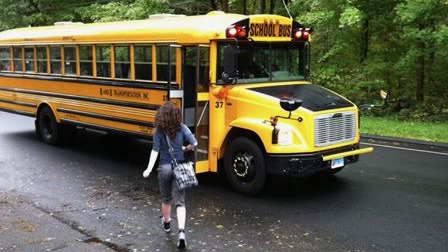
Classes resumed last week at both Beecher Road School and Amity Regional High School in Woodbridge, bringing familiar first-day traffic and a reminder for drivers on local roads to be patient as students, families, and bus routes adjust to fall routines.
Leadership turnover at Beecher
This year marks another transition in leadership at Beecher. Christopher Montini began his tenure as superintendent on July 1, 2025, after leading Naugatuck schools. Since 2019, five individuals have occupied the role:
- Christine Syriac served as interim superintendent in 2019, as the Woodbridge Board of Education conducted a search to replace outgoing superintendent Bob Gilbert.
- Jonathan Budd led the district as superintendent until his resignation in mid-2022.
- Christine Syriac returned as interim again in 2022 while another search was conducted by the WBOE.
- Vonda Tencza was appointed in December 2022 and served as superintendent until June 2025.
- Christopher Montini took over as superintendent on July 1, 2025.
Elsewhere in Connecticut, as reported in the News Times on July 1, outgoing Woodbridge Superintendent Vonda Tencza was appointed interim superintendent of Brookfield Public Schools, where she will serve a one-year term from September 8, 2025, through June 30, 2026. Dr. John Barile, who previously served as superintendent in Bethany, became Brookfield’s superintendent in 2015 before stepping down in June 2025 to become Dean of the School of Education at Central Connecticut State University. Meanwhile, Anna Mahon — who had served as assistant superintendent in Brookfield and is a former Amity High principal — has accepted a position as assistant superintendent for teaching and learning in Westport, effective July 1, 2025.
A look at school data collected by the state
Connecticut’s EdSight portal provides detailed Strategic School Profiles and attendance datasets for every district. These dashboards allow residents to explore indicators such as test scores, student attendance rates, chronic absenteeism, teacher absences, and school safety reports.
For Woodbridge and the Amity district, the most recent numbers show attendance holding close to pre-pandemic averages, though staff absences remain elevated compared to earlier years. Safety indicators, including incident and discipline reports, track near state averages, with no sharp increases. Compared to district-level trends over the past five years, the picture suggests steady recovery from the disruptions of 2020–22, but also highlights ongoing challenges with staffing stability and student engagement.


Overall, an analysis of such school data can show how teacher and leadership turnover affects continuity in classrooms, student attendance reflects both engagement and wellbeing, and safety metrics are a window into school climate. Together, these measures show where investments in staffing and student support are making an impact—and where gaps remain.
The view from Woodbridge
As the new school year begins, our local schools continue to make strides while reckoning with the aftereffects of COVID-era disruptions experienced by students. The pandemic left its mark on Connecticut schools, though not as deeply as in parts of the country where classrooms stayed closed for longer. Local schools reopened relatively quickly, but the years since 2020 have produced two different stories in the data. In academics, schools are still in recovery — math and science scores have not yet rebounded. In absenteeism and staffing, though, the numbers suggest a new baseline: teacher absences and student attendance have stabilized at higher levels than before the pandemic.
The state’s Next Generation Accountability reports help sharpen that picture. According to the state’s website, these reports provide “a broad set of 12 indicators that help tell the story of how well a school is preparing its students for success in college, careers and life. It provides a holistic, multifactor perspective of district and school performance.”
The reports look not only at test scores, but at the systems that surround students: teacher attendance and retention, vacancies in special education and paraeducator positions, student absenteeism, and mental health staffing. Together, these indicators show how well the adults are meeting their responsibilities, and how well students are supported in turn. Some highlights of our local data show:
- Teacher absenteeism: At Beecher, the average number of teacher absences spiked to over 17 days in 2021–22 and has remained elevated. Bethany shows a similar pattern, while Orange has stayed more stable. High absenteeism undercuts consistency in the classroom.
- Educator attrition and vacancies: Both Woodbridge and Amity report relatively high retention of classroom teachers, but persistent paraeducator vacancies, especially in special education, remain a weak point.
- Chronic absenteeism among students: Absenteeism has dropped sharply from pandemic-era highs. At Amity, only 6.7% of students were chronically absent last year, close to the state’s target of 5%. At Beecher, the rate was 8% overall but nearly 15% for high-needs students.
- Mental health supports: Public Acts 22-47 and 22-116 now require districts to report student-to-staff ratios for mental health. In Woodbridge, Beecher students have access to 6.7 FTE mental health staff, or roughly 1 staff member for every 129 students. Amity employs a mix of psychologists, social workers, and nurses, though counselors remain in short supply.
To learn more, visit the state’s school data reporting portal EdSight.