Appeal Filed Over Woodbridge Zoning Changes
Court case challenges TPZ decision, outcome could shape future apartment proposals
Last December, the Town Plan and Zoning Commission (TPZ) adopted amendments that allowed for greater height and density of multifamily housing in Woodbridge’s Zone A (you can watch the December 2, 2024 meeting on YouTube). These changes, requested by the developer of a proposed apartment complex at 804 Fountain Street — a building described by critics as out of scale with its neighborhood at longer than a football field, and incompatible with the town’s existing character (see image, below) — raised concerns because the public hearing was poorly noticed and no residents attended.
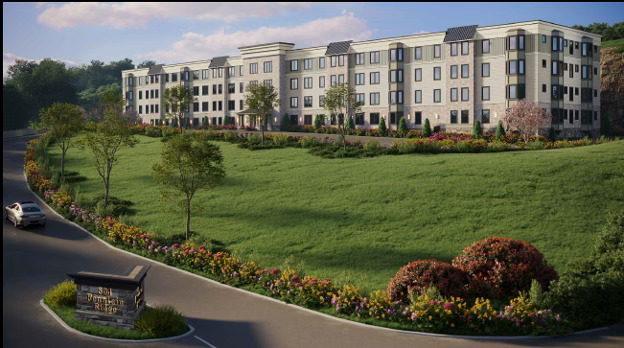
In response, Stephen Mason, a nearby resident, submitted an application co-signed by 45 others asking the TPZ to restore the zoning rules to what they were before December 2, 2024. Mason’s application argued that the process that produced the amendments was flawed and that the changes created a risk of additional large-scale developments across town. The application called for a simple reversion of the rules as a first step, with the expectation that a broader, more deliberate review of “opportunity housing” regulations could follow. The December 2 amendments affect a wide swath of Zone A, including portions of Beecher Road, Fountain Street, Ansonia Road, Manville Road, Woodfield Road, Park Lane, Amity Road, Pease Road, North Pease Road, Center Road, and Rice Road — with as many as 482 apartments possible on one short stretch of Beecher Road alone.
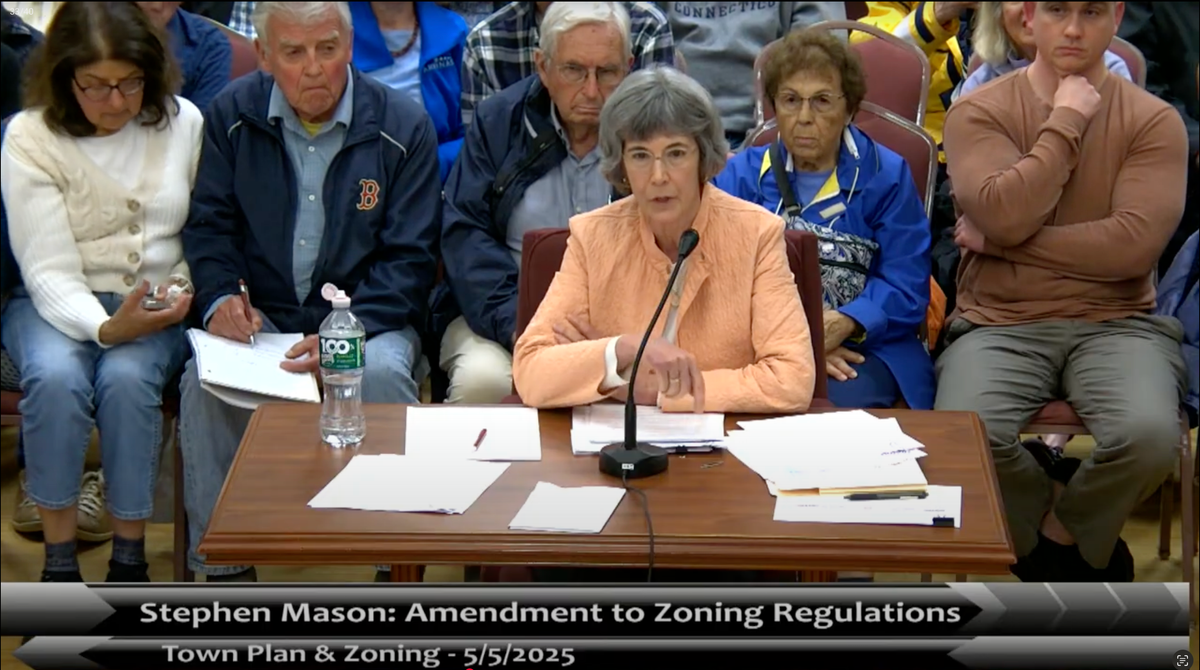
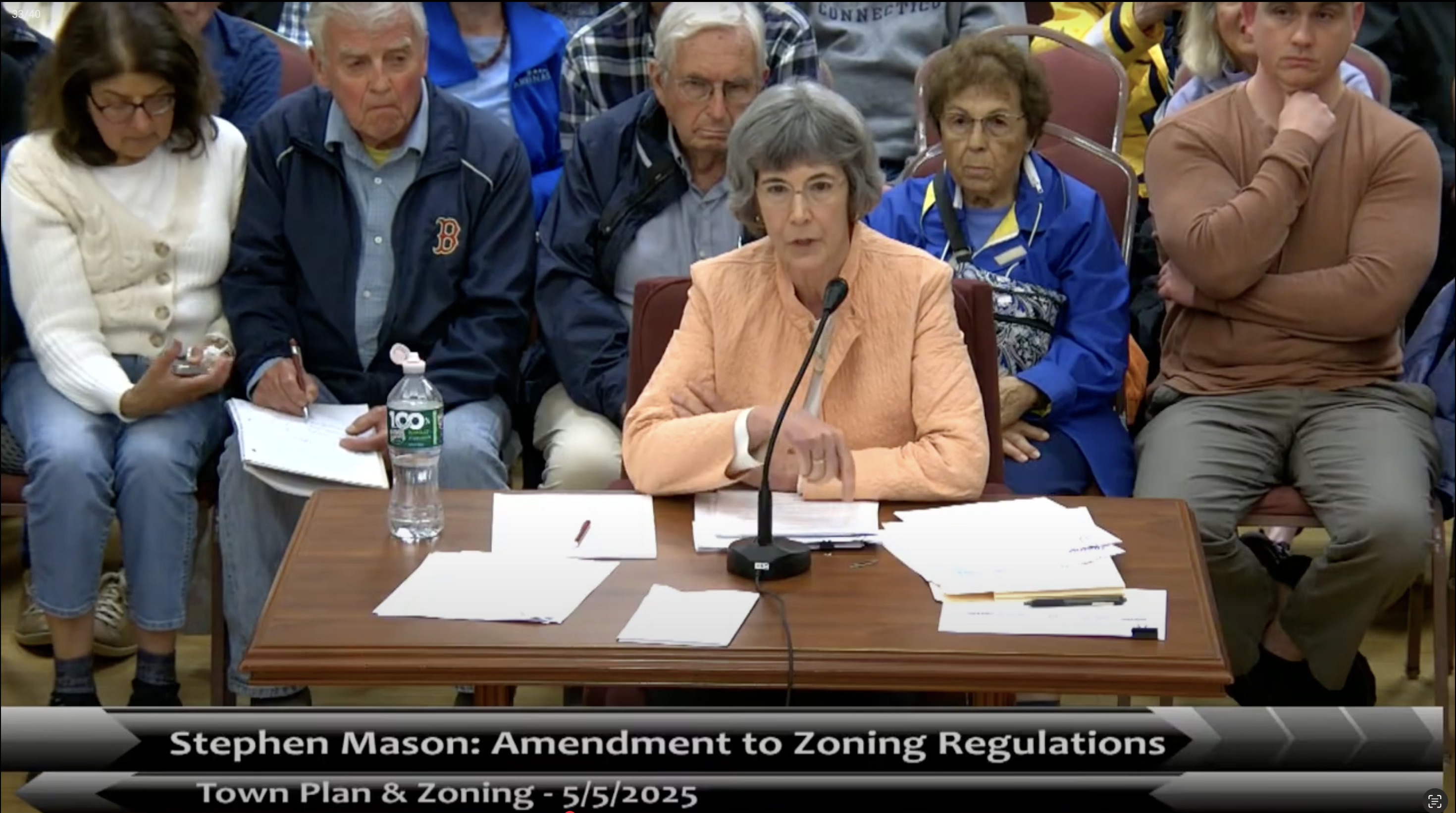
Many residents voiced support of Mason’s application (see May 5, 2025 meeting video on YouTube). Mason himself was unable to attend that evening due to illness, so the presentation was delivered on his behalf by former First Selectman Amey Marrella, one of the 45 co-signers of the application (full disclosure: in July, Marrella became a candidate for the Board of Selectmen in the upcoming Nov. 4 election).
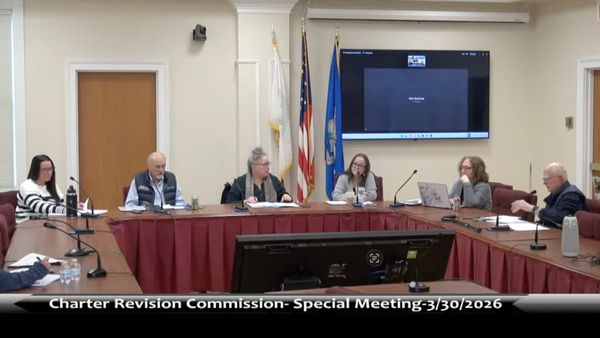
Later in May, the TPZ voted 3-2 to reject the application (see May 20, 2025 meeting video on YouTube). The application and background documents are available for the public to review (read Mason Application Supporting Memorandum). That rejection has now been appealed to Superior Court (you can read the filing on the court’s website). The appeal claims that the TPZ acted improperly and that its decision should be set aside, with Mason’s application accepted.
What is being challenged
Mason’s appeal raises several procedural and substantive concerns about how the TPZ handled his application:
- Defective notice. Legal notice of the December 2 hearing was placed in the New Haven Register, with the second ad running on Thanksgiving Day. No residents attended, which Mason argues is proof the notice failed its purpose.
- Rushed treatment. The TPZ approved sweeping amendments in a single night, even though far less consequential “scrivener’s error” corrections earlier in 2024 were kept open for months with repeated continuations.
- Reliance on flawed data. The commission relied on the town’s Affordable Housing Plan, even though residents had identified errors in its statements about population, income, and school enrollment trends.
- Ignoring broader planning. The amendments were inconsistent with “smart growth” principles and with the town’s ongoing Plan of Conservation and Development (POCD) update. Mason noted that the POCD survey showed residents favored smaller-scale affordable single-family options, and that the draft POCD goals called for growth consistent with existing land use, environmental protection, and infrastructure capacity.
- Out-of-step regulations. The December 2 changes increased maximum height from 2.5 to 4 stories, raised density from 15 to 18 units per acre, expanded impervious coverage from 22.5% to 30% of a parcel, and reduced affordable units from 20% to 12%. Mason argued this left Woodbridge with standards far looser than neighboring towns, which generally cap height at 35 feet in residential zones, keep density far lower, and often require a higher affordable percentage.
- Pre-judging and recusal. Mason’s filing notes that while one commissioner recused properly and left the room, another participated in questioning and made statements suggesting the outcome had already been decided, then recused only when the commission moved to deliberate. He argues this sequence created a procedural irregularity that undermined fair consideration of the application.
- Mischaracterization. The TPZ justified its rejection in part by concluding that Mason’s proposal was “the same application” already acted on, which under state law would bar it from being reheard within one year. Mason argues the opposite is true: his application sought to reverse the December 2 amendments, not replicate them.
If successful, the appeal would allow thoughtful reconsideration, with public input, of what regulations should apply to future multifamily housing proposals in town. And at a time when a broad cross-section of residents has been voicing deep concern (see, for example, testimony at the June 2 hearing and the September 2 hearing), the TPZ should not lightly dismiss or refuse to consider such an application — careful, transparent decision-making is exactly the role the commission is charged to play. The residents of our town deserve no less. At stake here is not only the outcome of one zoning application but the quality of governance in Woodbridge.
Editor’s Note: Community Voice essays reflect the perspectives of their authors. They are published to foster dialogue about issues of local concern, including questions of governance, transparency, and accountability. Other types of content are also welcome in this section, such as photo essays or updates from community groups to highlight upcoming events. To submit a Community Voice essay for consideration, please send your piece (600–900 words) by contacting the editor by email.