A closer look at Amity facilities and capital planning
District leaders acknowledge need to address significant infrastructure issues across all three schools

District leaders acknowledge need to address significant infrastructure issues across all three schools
As the annual budget-setting process moves forward in Woodbridge and the other Amity member towns — including consideration of the district’s proposed FY2027 budget following the superintendent’s presentation to the joint Boards of Selectmen and Finance — attention is increasingly turning to longer-term facilities and capital planning at the Amity Regional School District. While no formal bond referendum has yet been scheduled, a review of recent meeting records, committee actions, and published agendas shows that planning for major facilities investments is already underway.
This explainer compiles where and how facilities and capital planning has appeared in the public record so far, and highlights what is known — and what remains unresolved — as the process moves forward.
Capital planning alongside the annual budget
Amity officials have emphasized that the district’s proposed operating budget increase for the coming fiscal year is relatively modest, aided in part by a temporary decline in debt service. At the same time, district leaders have acknowledged the need to address significant facilities and infrastructure issues across Amity’s schools.
Operating budgets and capital projects follow different approval paths and timelines, but recent discussions suggest that major capital planning is advancing in parallel with the annual budget cycle.
August Facilities Committee actions
At its August 11, 2025 meeting, the Amity Board of Education (ABOE) Facilities Committee reviewed facilities project updates and end-of-year capital reserve balances. According to the meeting minutes, the committee voted unanimously to recommend transferring $1,129,132 — representing a 2% appropriation of year-end funds — into the Reserve Fund for Educational Expenditures, designating funds for a fire pump replacement at Amity Middle School Bethany (AMSB), technology infrastructure upgrades, and library media center renovations.
The committee also voted unanimously to recommend pursuing a feasibility study for middle school library media center renovations, examining options such as enclosing existing courtyards and relocating library spaces. The motion explicitly noted that this revised design scope would shift the middle school library projects toward a future bond, rather than being fully funded through district resources, signaling that the projects would be contingent on voter approval through a future district-wide bond referendum.
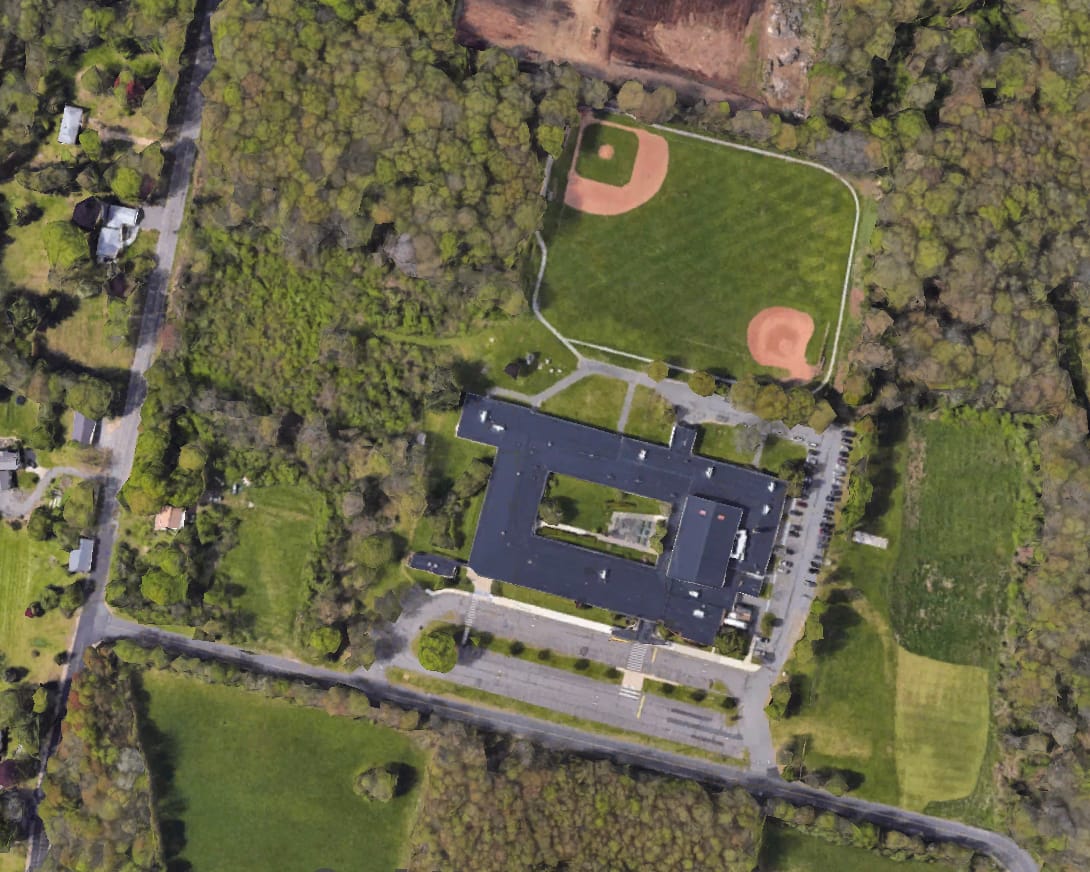
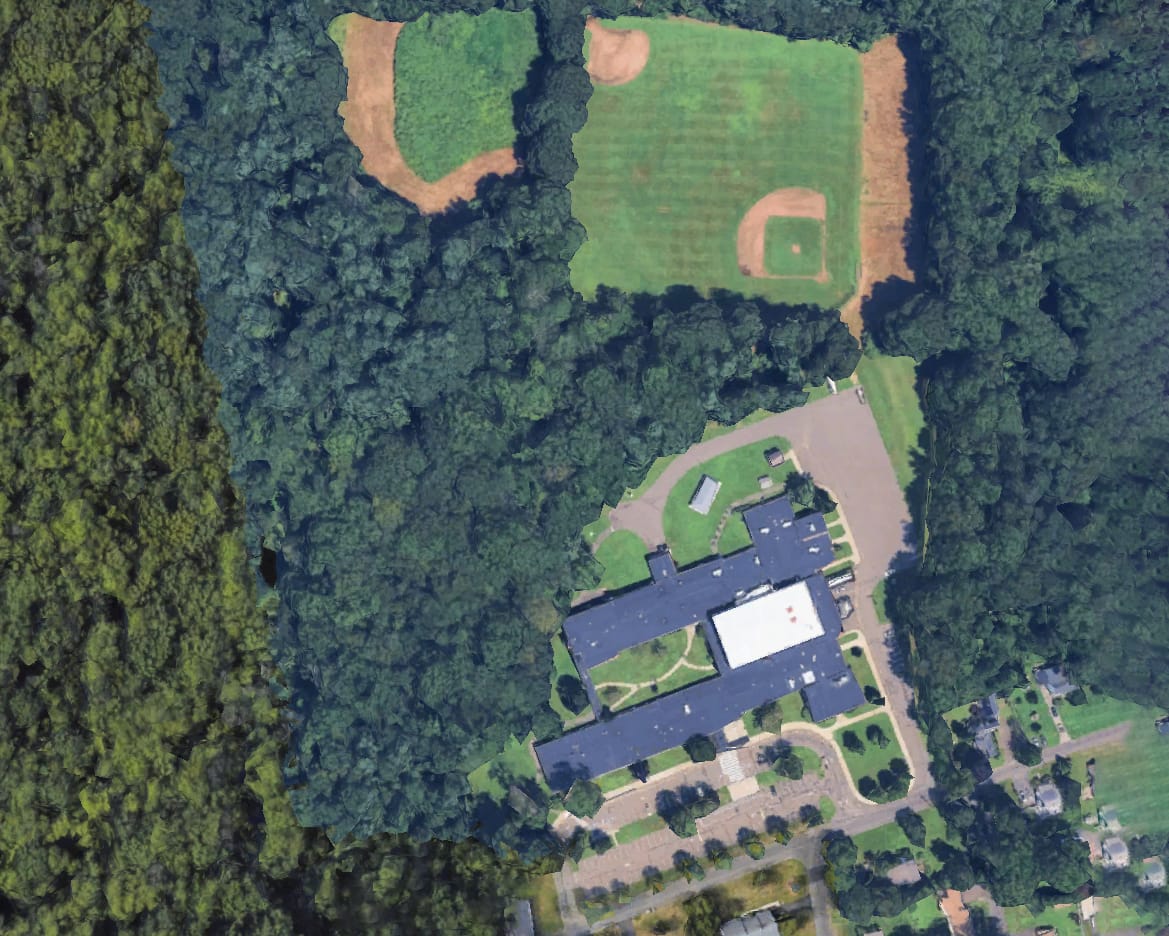
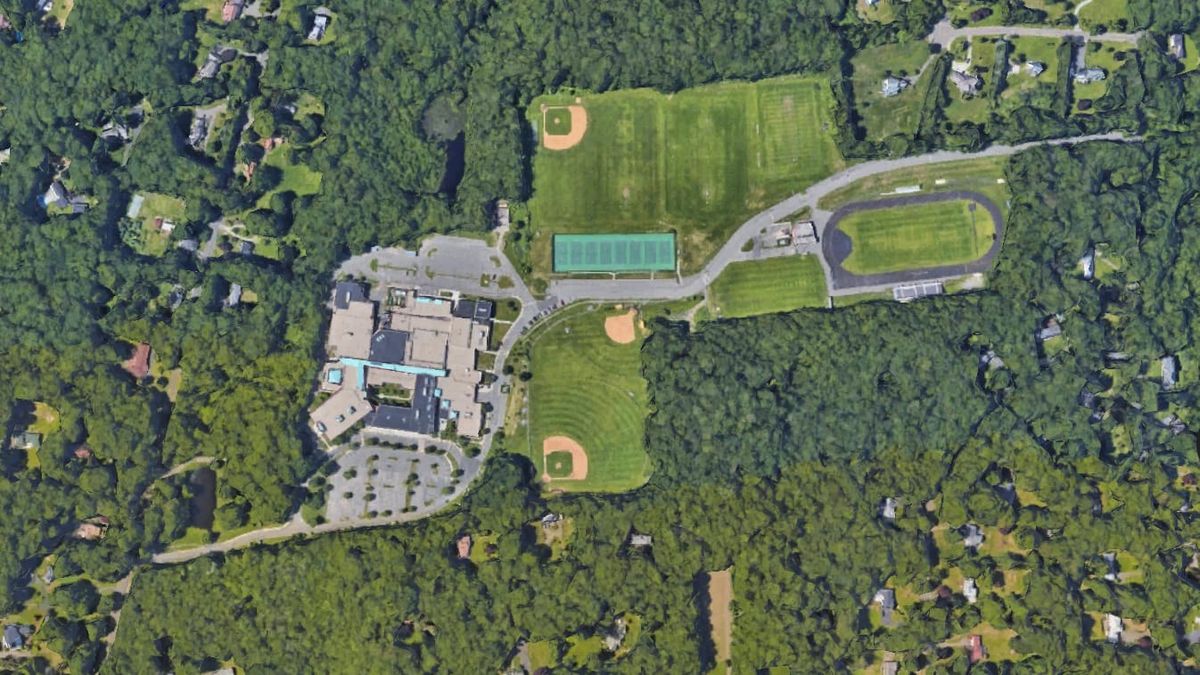
Amity Middle School Bethany campus (at left) and Amity Middle School Orange campus (at right).
August Amity Board of Education actions
At its August 18, 2025 regular meeting, the ABOE authorized the administration to seek proposals for a feasibility study for middle school library media center renovations, again noting the potential to reposition these projects within a future bonding package — see August 18, 2025 ABOE meeting minutes.
At the same meeting, the Board approved a revised schematic design and cost estimate for the High School library media center renovation. The project cost at that stage was approximately $3.48 million inclusive of adjoining classrooms, offices, and storage areas, based on plans presented by Silver Petrucelli and Associates.
The full Board also voted to formally designate the previously approved $1,129,132 in reserve funds toward specific capital projects, including $250,000 for the AMSB fire pump replacement, $200,000 for technology infrastructure, and $679,132 for middle school library media center renovations.
High school library media center cost documentation
Cost documentation for the High School library media center renovation illustrates the scale of individual facilities projects under consideration. Based on the detailed cost estimate, as the project scope was more fully defined by January the total project cost reflects an increase of roughly $215,000, or about 6 percent. This brings the total estimated project cost to approximately $3.69 million, combining both state-eligible and state-ineligible components. The estimate reflects not only library space, but also associated instructional and support areas, underscoring how programmatic goals and facilities upgrades are being combined within a single capital project.
Facilities items on the February 2 ABOE agenda
An update on facilities planning also appears prominently on the published agenda for the Board’s February 2, 2026 special meeting. A presentation of design plans for the High School library media center by Silver Petrucelli is anticipated, followed by discussion and possible action on approval of those plans.
The agenda materials note that the design plans must be approved prior to a scheduled Project Concept Review meeting with the Connecticut Department of Administrative Services, a required step for projects seeking state reimbursement.
What to watch for next
Taken together, public records so far show that facilities and capital planning has been advancing incrementally through committee recommendations, feasibility studies, and Board actions. Several projects initially contemplated as district-funded renovations have been repositioned as potential bond projects, and individual projects already carry multi-million-dollar cost estimates. However no capital bond referendum has yet been scheduled.
In the months ahead, residents and town officials may expect additional presentations, clarification of reimbursement assumptions, and further discussion of how facilities planning will be governed and communicated before any bonding proposal is finalized.
As the budget process continues, questions raised during the joint Boards of Selectmen and Finance presentation remain relevant. Town officials noted that the district’s current operating budget benefits from relatively low debt service, and cautioned that future capital bonding — if approved — would alter that picture in subsequent years. How those potential long-term obligations are factored into near-term budget decisions, communicated to residents, and weighed alongside other capital needs across the three towns will be central issues as facilities planning at Amity moves forward.
The Woodbridge Town Chronicle will continue to report on developments related to Amity’s facilities and capital planning in its ongoing Our Schools coverage.